The Ranunculus Project - Launched in Rhayader
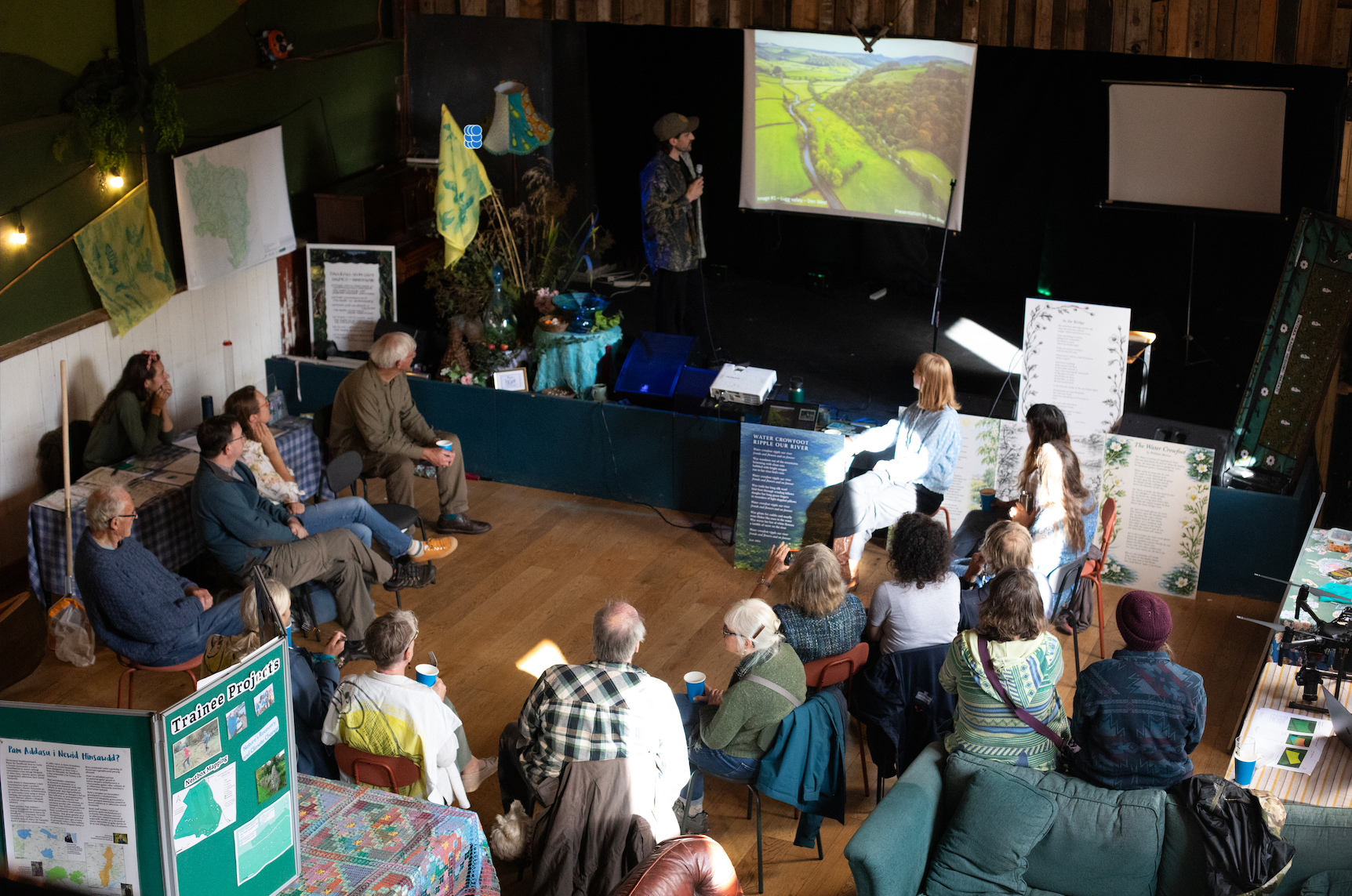
Workshops, presentations, ceremony and storytelling helped launch The Ranunculus Project at The Lost ARC in Rhayader.
New research project launched to investigate the decline of water crowfoot in the Wye and Usk
Our new research project investigating the decline of water crowfoot in the Rivers Wye and Usk has officially launched at an event in Rhayader. Bringing together conservation organisations, researchers and local communities; ‘The Ranunculus Project’ aims to understand what is happening to this iconic river plant and help inform its recovery.
Friends of the River Wye (FORW), working in partnership with Save the River Usk (STRU), will lead a collaborative, cross-border project spanning Wales and England. The research will combine cutting edge near-infrared drone surveys, historical records and photographs, and extensive citizen science to investigate the decline of water crowfoot, part of the Ranunculus family.
The project’s launch was celebrated at an event at the Lost ARC in Rhayader. The Lost ARC is a community hub and features an evolving exhibition about the River Wye created by local citizen scientists and river activists. It was the perfect setting for our occasion.
The event featured talks and workshops outlining the project’s aims, alongside contributions from Radnorshire Wildlife Trust, which shared its work through the Wilder Lugg project, and The Wild Rivers Project, who discussed their voyage down the Wye and their work engaging schoolchildren with the river. The occasion also included a ceremonial contribution from Lady Wye, Vey Straker and storytelling by Christine Watkins.
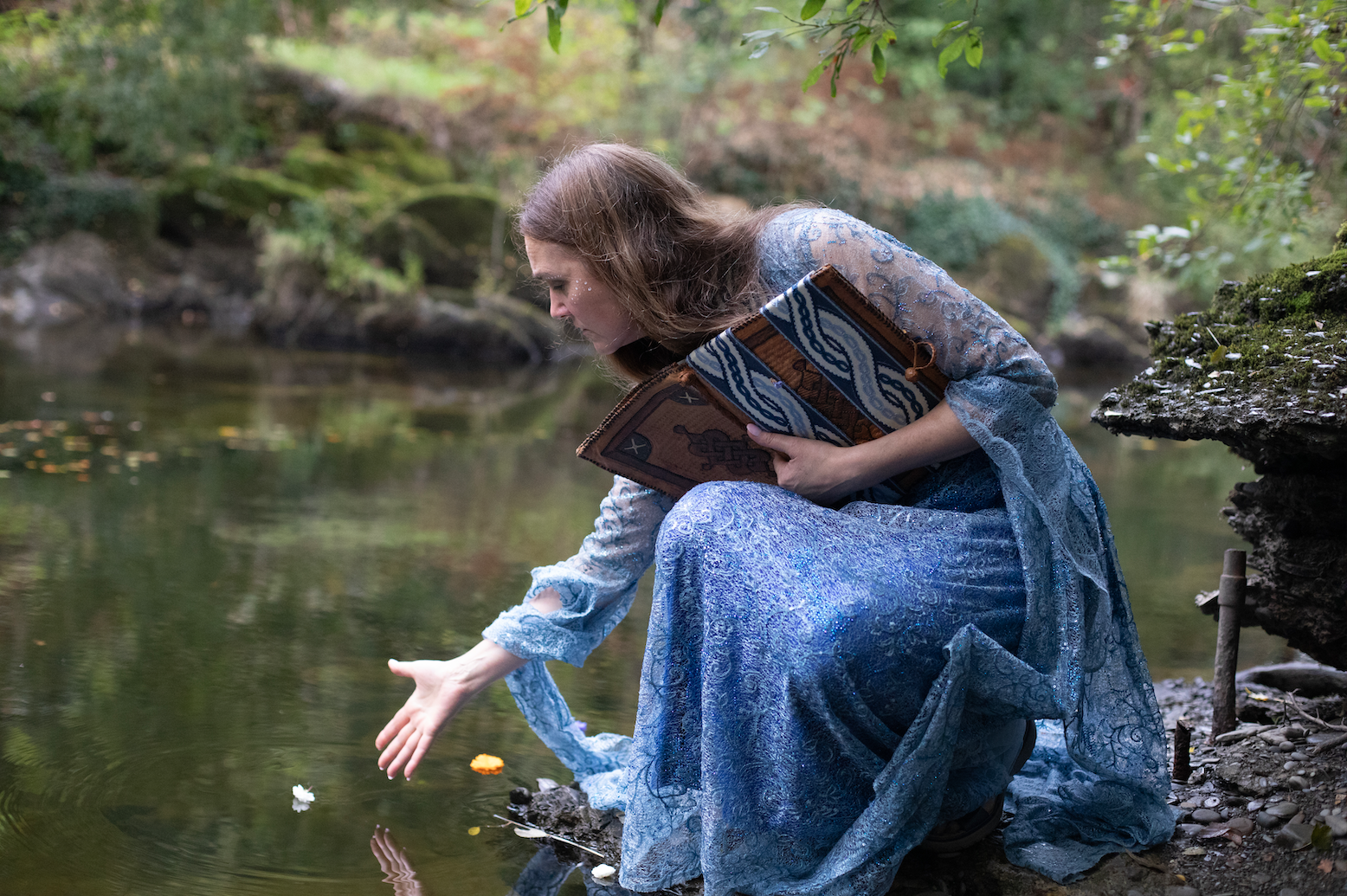
Lady Wye makes an offering for the return of water crowfoot.
The launch marks the beginning of an ambitious programme of research into one of the most visible signs of ecological change in the Wye and Usk catchments.
An iconic plant in decline
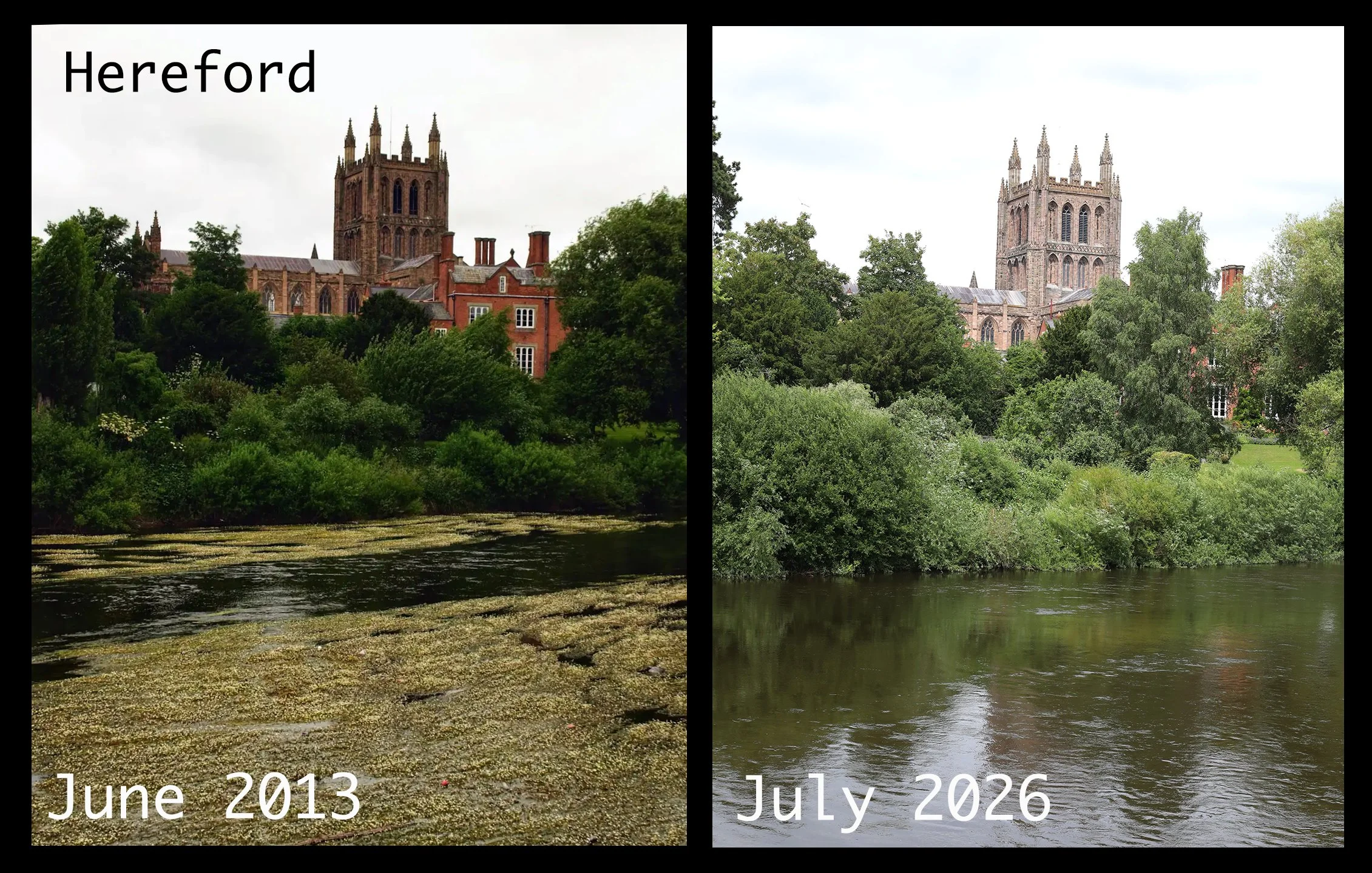
Images submitted through the Big Ranunculus Watch illustrate the disappearance of water crowfoot in specific locations.
The Wye was once famous for its extensive beds of water crowfoot. In summer, the river’s surface would be dotted with small white flowers, with green fronds flourishing across the riverbed. Today, these sights have become increasingly rare.
Water crowfoot is a keystone species in these river ecosystems, providing important habitat for a wide range of freshwater life. Its presence is also a significant reason for the River Wye’s designation as a Special Area of Conservation. Yet the plant has struggled under the pressures facing our rivers, including pollution and a changing climate. Experts and local observers estimate that more than 90% of the water crowfoot in the Wye has been lost over the last decade.
Despite the scale of the apparent decline, there is currently insufficient information to establish precisely how much has disappeared, how its distribution has changed over time, or which factors are responsible.
Understanding what has happened is essential if efforts to restore water crowfoot are to succeed. The new project aims to build the evidence needed to identify the pressures affecting the plant and help shape effective action to support its recovery.
Cutting-edge research across the Wye and Usk
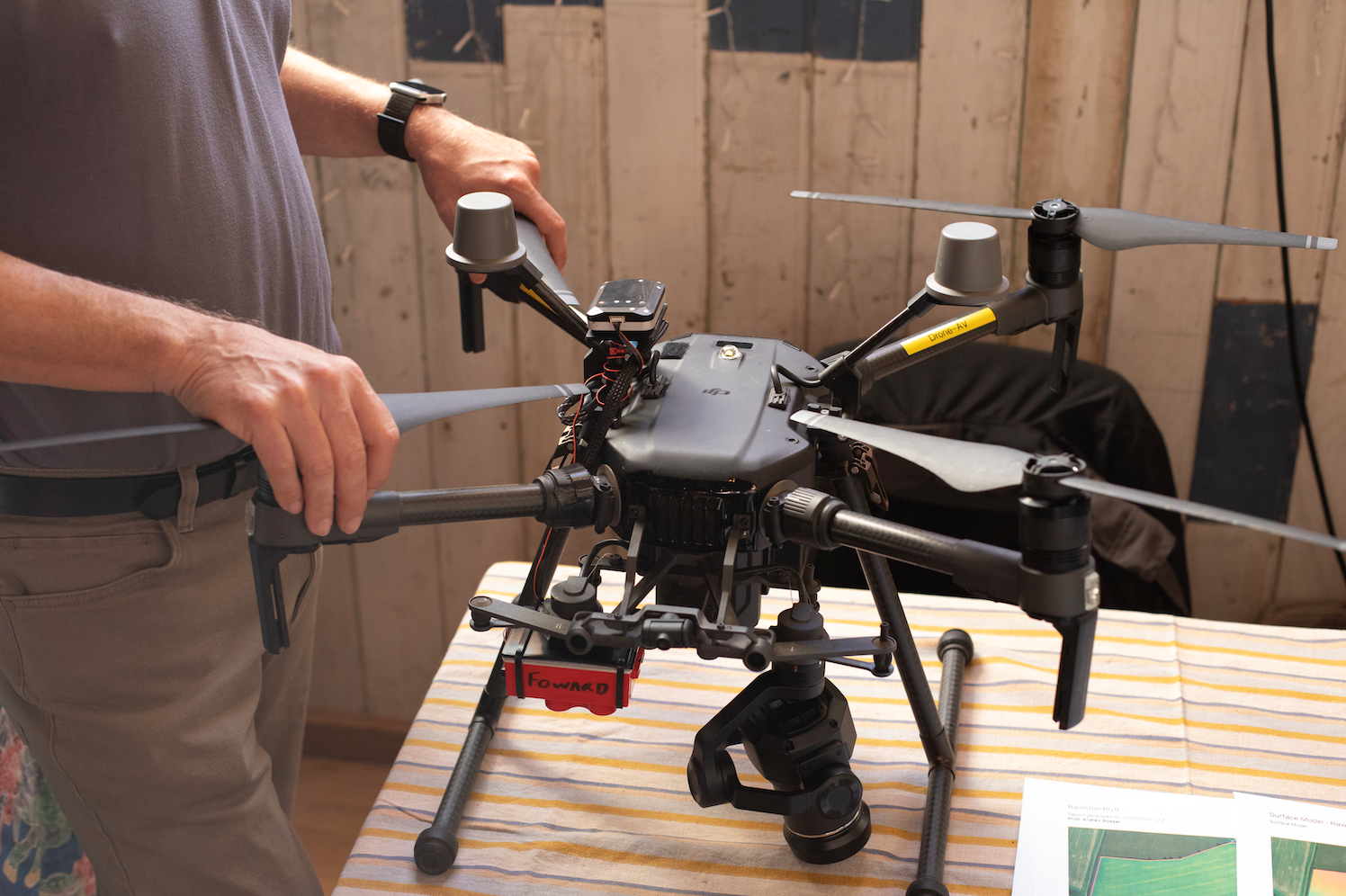
Those that attended the launch learnt about the drone surveys and how the infra-red cameras are able to obtain detailed imagery of the ranunculus beds.
The project has already begun, with initial drone surveys completed using near-infrared technology. These surveys will help researchers investigate the presence and condition of water crowfoot across the rivers, building on pioneering work by Dr Fleur Visser of the University of Worcester. However, the main focus of the drone surveys and fieldwork will be the growing seasons of 2027 and 2028, when the plant can be monitored during the period most relevant to its growth and development.
The research will bring together different sources of evidence, including historical photographs, ecological records, satellite imagery and ground observations. By comparing historical and present-day information, the project aims to build a clearer picture of where water crowfoot once flourished, where it remains today and how its distribution has changed.
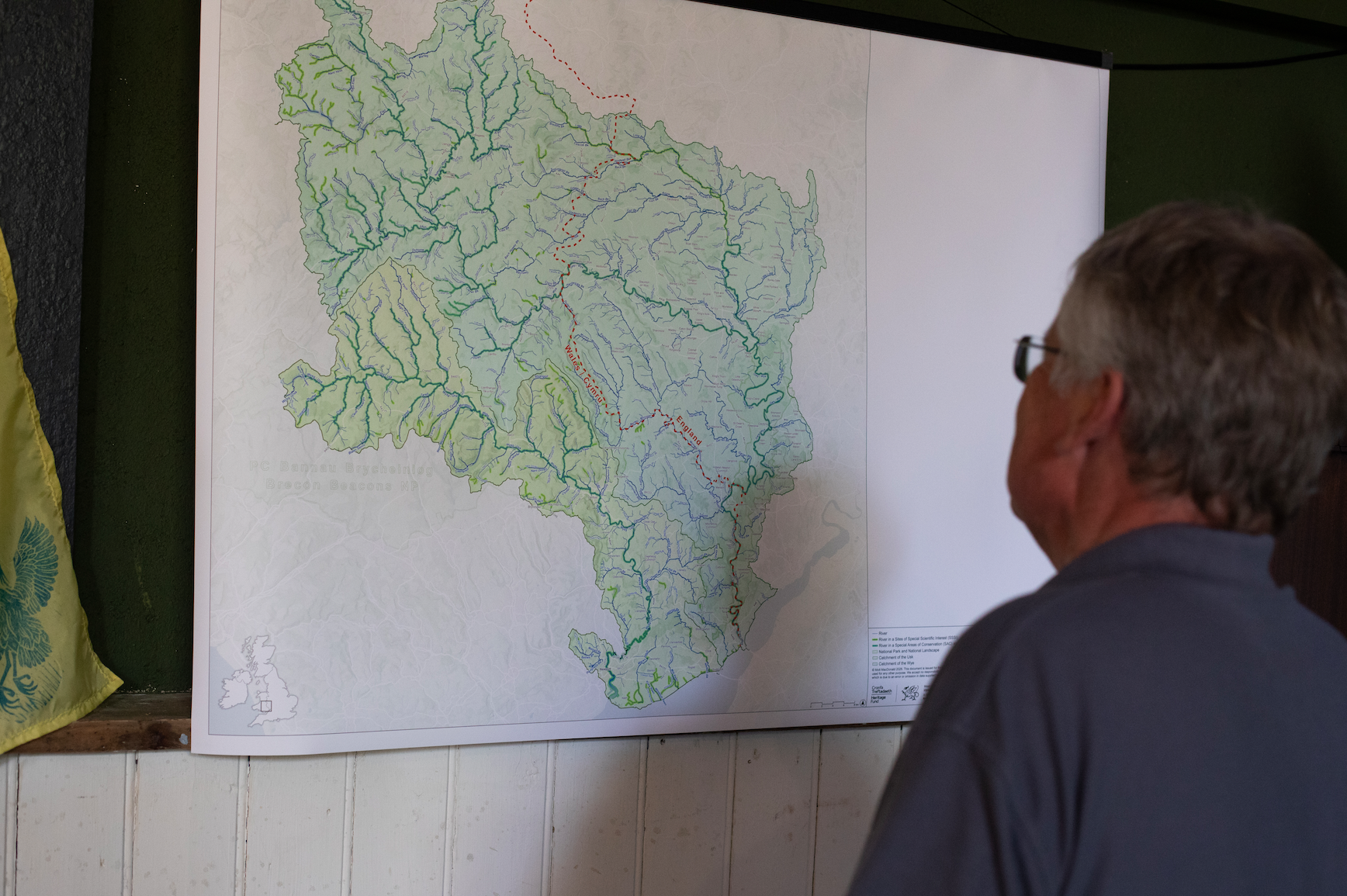
The Wye and Usk catchments.
The work will cover 36 sites across the Wye and Usk catchments in Wales and England, helping to build a more comprehensive understanding of the decline across both rivers.
Local people at the heart of the research
Citizen science will be central to the project, with volunteers receiving training to survey specific locations where water crowfoot may be present across the two river catchments. These training sessions have already begun.
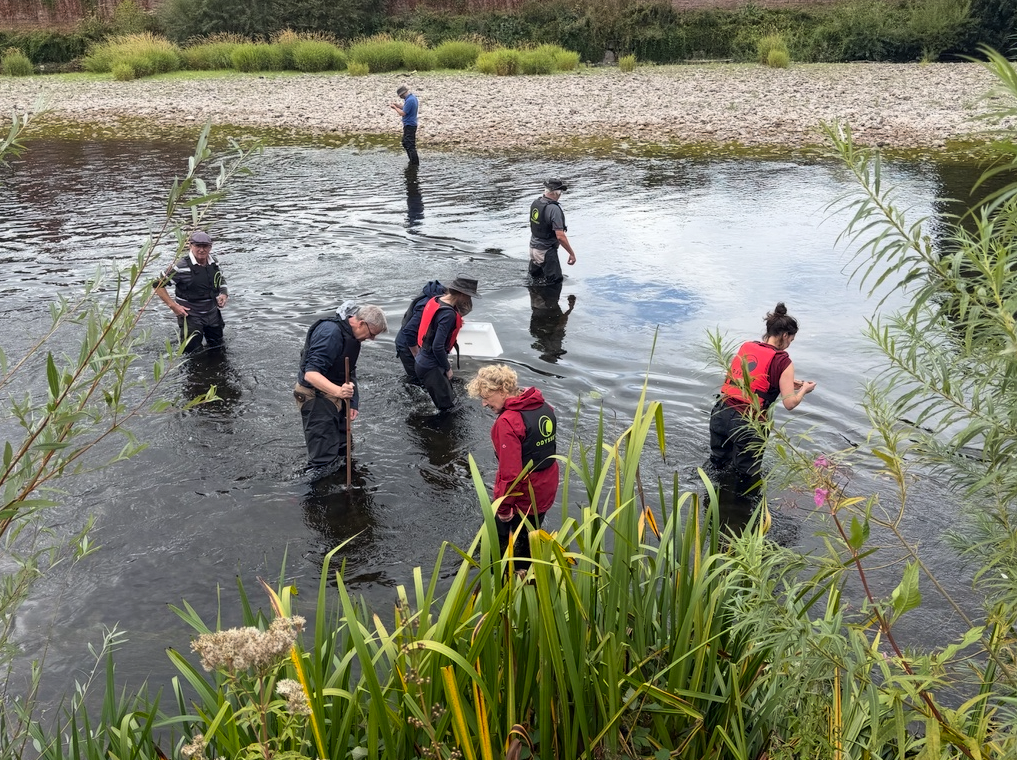
Macrophyte training day on the Usk.
Over the next two years, citizen scientists will help gather information about the plant’s distribution and the conditions in which it is found. Their observations will contribute to the wider analysis of the factors that may be driving its decline.
The project will also build on the Big Ranunculus Watch, an initiative launched by Friends of the River Wye to collect historical and recent photographs of water crowfoot. These images are helping to build a record of the plant’s former abundance and its changing presence along the river.
By combining local knowledge and observations with new technology and scientific research, the project aims to create a stronger evidence base for understanding the challenges facing water crowfoot.
It also offers an opportunity for people who care about the Wye and Usk to play a direct role in investigating the changes they have witnessed in their rivers.
Working together to support recovery
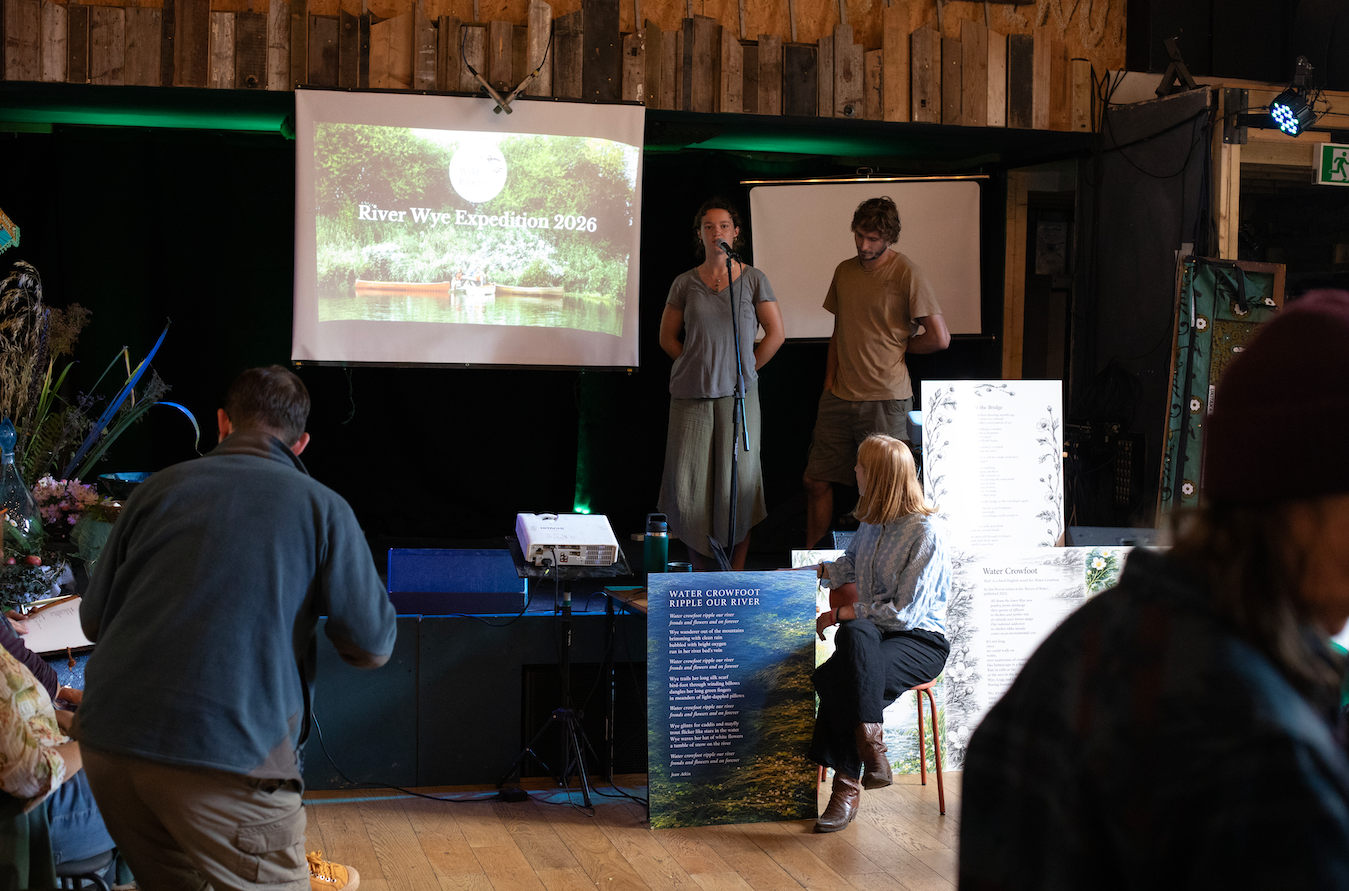
The Wild Rivers Project spoke about their adventures on the Wye and their efforts to inspire a new generation of river guardians.
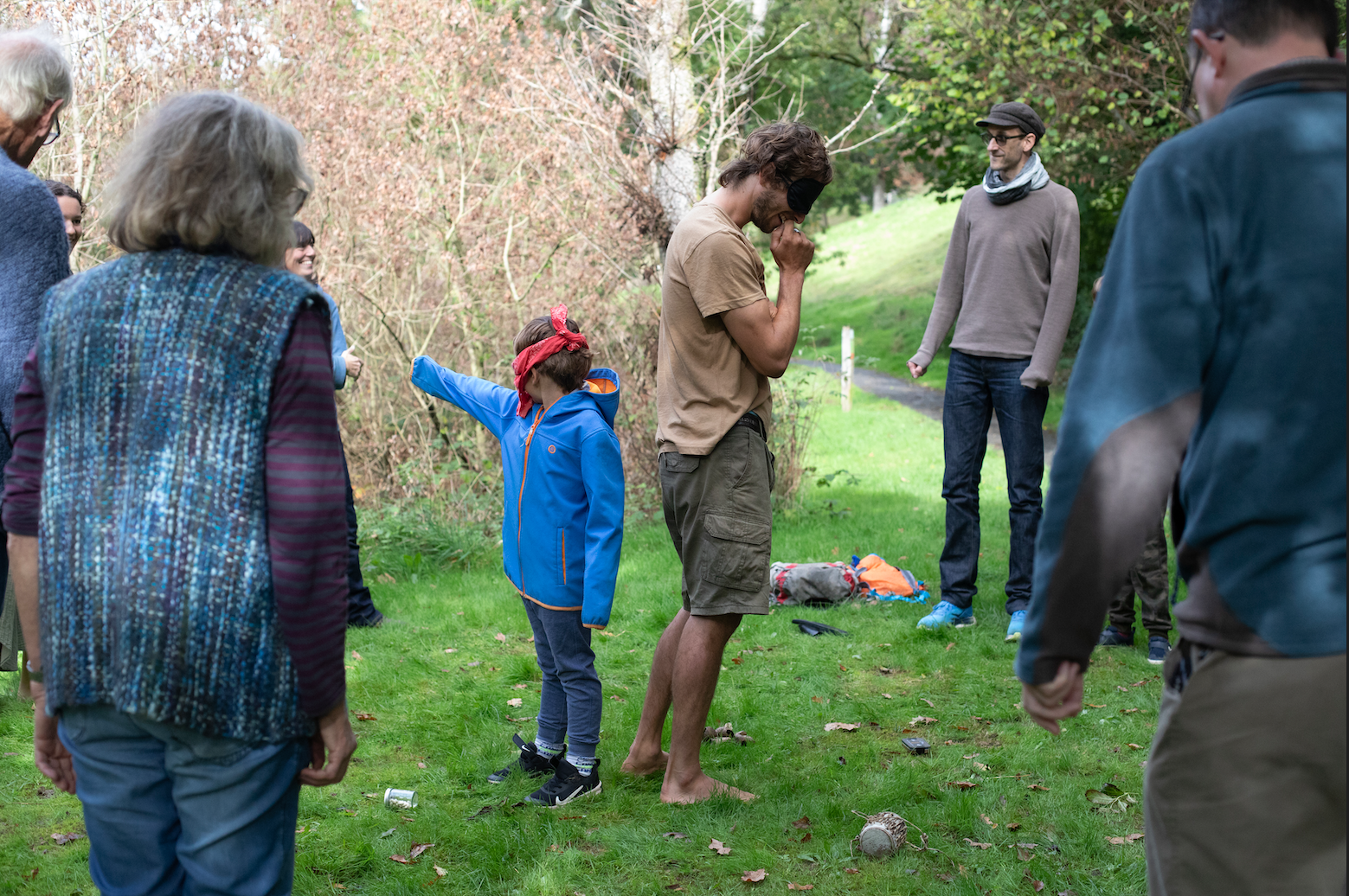
Fun on the river bank.
The launch in Rhayader highlighted the value of bringing together organisations working across conservation, research, education and community engagement.
The causes of water crowfoot’s decline are not yet fully understood, and the project will not assume a single explanation. Instead, it will investigate the evidence to help identify the pressures affecting the plant and inform future decisions about its recovery.
By establishing what has been lost and understanding the reasons for that loss and sharing the results openly, the project hopes to help create the conditions for water crowfoot to flourish once again in the Wye and Usk.
Katie Driver, Freshwater Ecologist and Project Lead said:
"It was a truly motivating and inspirational day with so much input from our amazing collaborators and attendees. It was amazing to see how much effort is being dedicated to protecting our rivers and I think we all felt very connected with the Wye and Usk by the end of the afternoon. I'm looking forward to our next events and hope to see lots of new faces there!"
Project funding

This project is funded by the Nature Networks Fund. It is being delivered by the National Lottery Heritage Fund on behalf of the Welsh Government, with additional support from the Wye Valley National Landscape.
Ariennir y prosiect yma gan y Rhaglen Rhwydweithiau Natur. Mae'n cael ei ddarparu gan y Gronfa Treftadaeth, ar ran Llywodraeth Cymru.
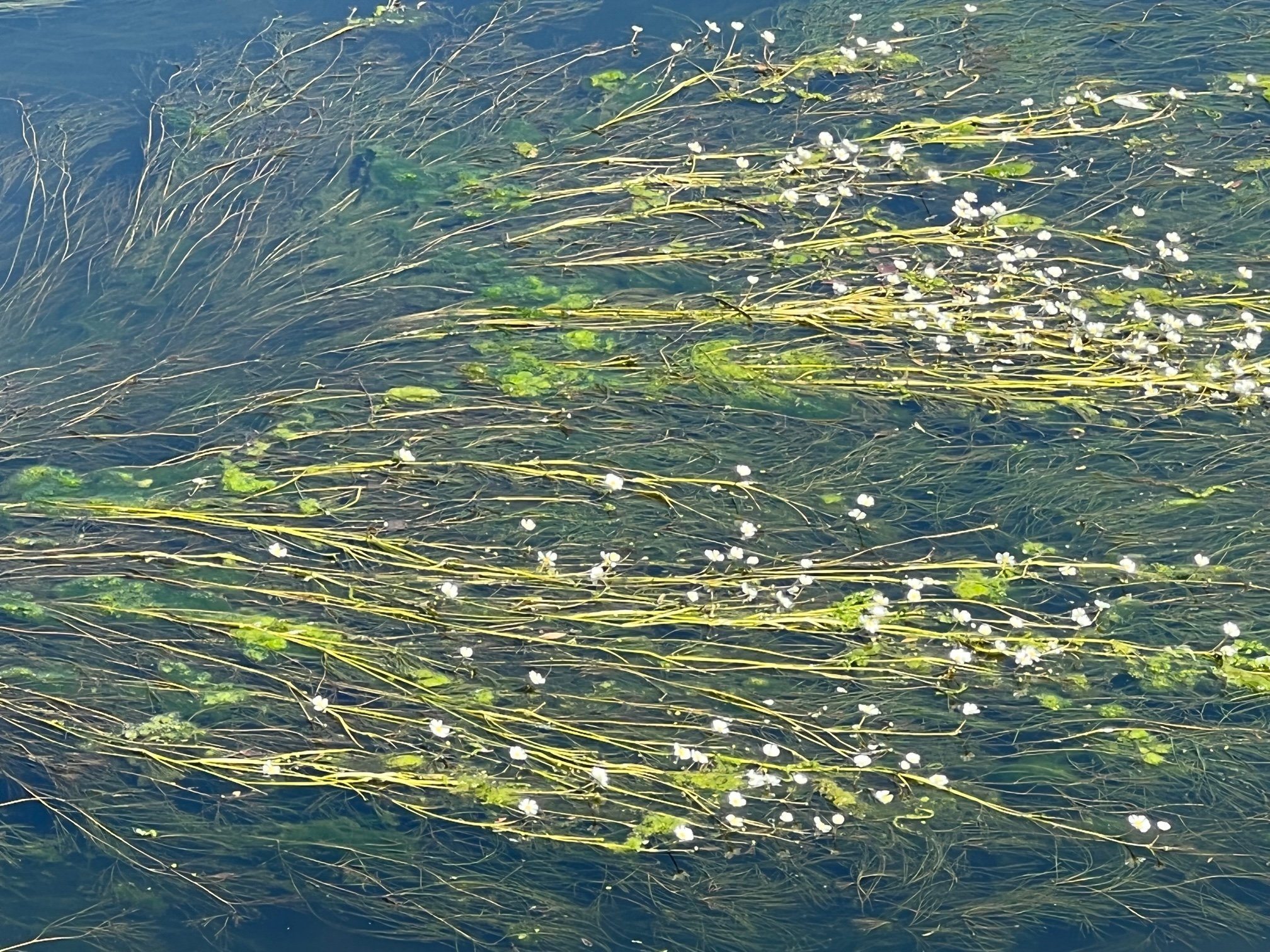
Water crowfoot.