
Charter for the River Wye
The Charter for the River Wye sets out a series of shared principles reflecting the importance of the River Wye and its tributaries to people, nature and future generations.
The River Wye is central to the county's natural environment, rural economy, tourism, heritage and the wellbeing of communities across the catchment.
Believed to be the first full catchment River Charter in the UK and the first Rights of River framework for a Welsh river, the Charter has been developed collaboratively across the catchment and endorsed by councils and institutions including Herefordshire, Powys and the Forest of Dean, alongside Bannau Brycheiniog National Park and the Wye Valley National Landscape. Monmouthshire County Council is expected to confirm their support in the near future.
The Charter recognises the River Wye as a living ecosystem with intrinsic rights including the right to flow, biodiversity, regeneration and freedom from pollution. Supporters describe it as a development of national significance in the recognition of the rights of rivers and ecosystems
The initiative forms part of a growing international Rights of Nature movement that is reshaping how ecosystems are recognised and protected in law and governance. The rights expressed in the Charter reflect protections already recognised across existing environmental legislation and regulation.
The River Wye has become a national symbol of both ecological decline and public demand for stronger environmental protection. The river remains under severe pressure from nutrient pollution, biodiversity loss, climate impacts and emerging pollutants.
The original proposal was tabled by Conservative councillor Elissa Swinglehurst, reflecting broad political support for stronger river protection and long-term stewardship of the Wye.
In 2025, ecologist Dr Louise Bodnar became the first appointed “Voice of the River Wye”, taking a formal voting seat on the Wye Catchment Nutrient Management Board to represent the river’s interests in official decision-making
Dr Louise Bodnar:
“Putting the River on the board begins to move us away from an anthropocentric view of the world, where nature is a resource for us to use, towards a view in which we understand ourselves to be interdependent parts of the natural world, reminding us that we belong to the earth, the earth does not belong to us.
“By recognising the River Wye as a stakeholder in planning, permitting and environmental governance, the Charter helps embed the river’s interests within decision-making processes. It strengthens accountability and encourages the long-term stewardship needed to support the Wye’s recovery and future resilience.”
The ceremony continues a growing series of cultural and ecological gatherings centred around the River Wye, including recent events connected to Robert Macfarlane’s Hay Festival appearance helping to launch his Sunday Times bestselling book Is A River Alive?
Author Robert Macfarlane:
“Change is rising from the riverbank upwards, and change from below is almost always the most durable kind of change. What especially impresses me is the catchment-wide nature of this initiative. Having four councils and two landscape-scale organisations behind it is testimony to the alliance-building power of the river rights vision.”
Amy Fairman, Head of Campaigns at River Action:
“The River Wye has become a symbol of both ecological collapse and public determination to fight for our rivers. This Charter represents something genuinely hopeful: communities, councils, campaigners and institutions coming together to recognise that rivers are living systems deserving of protection, representation and recovery.”
Vey Straker, Lady Wye, and Kim Kaos, the Goddess of the Wye led the launch ceremony.
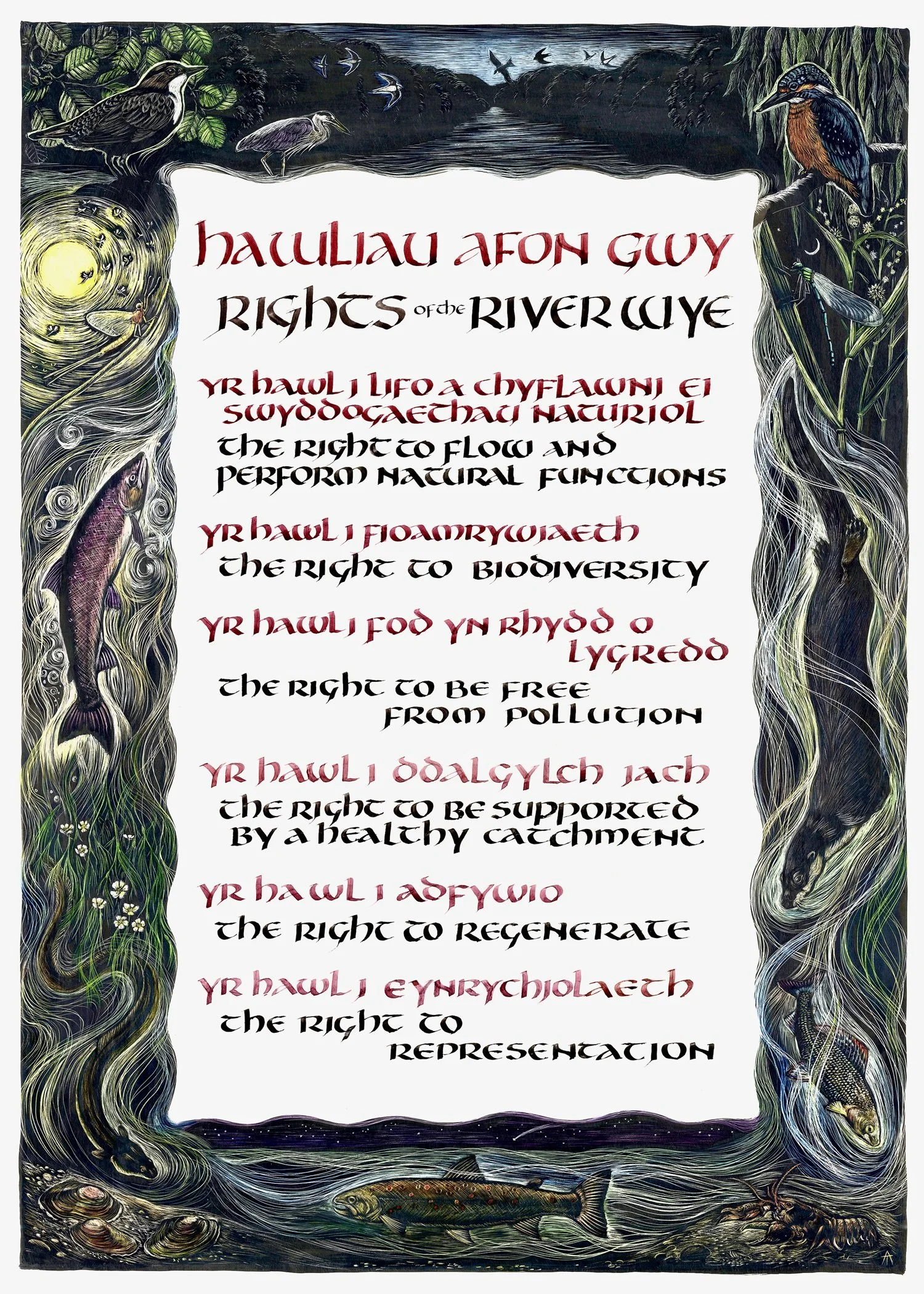
The River Charter
The beautiful illustrated border of the Rights of the River Wye Charter is by stained-glass artist and illustrator Tamsin Abbott.
The calligraphy is by Mollie Meager – a long-time campaigner for the Wye, based in the Lower Wye Valley.