Macrophyte training begins - Ranunculus Project
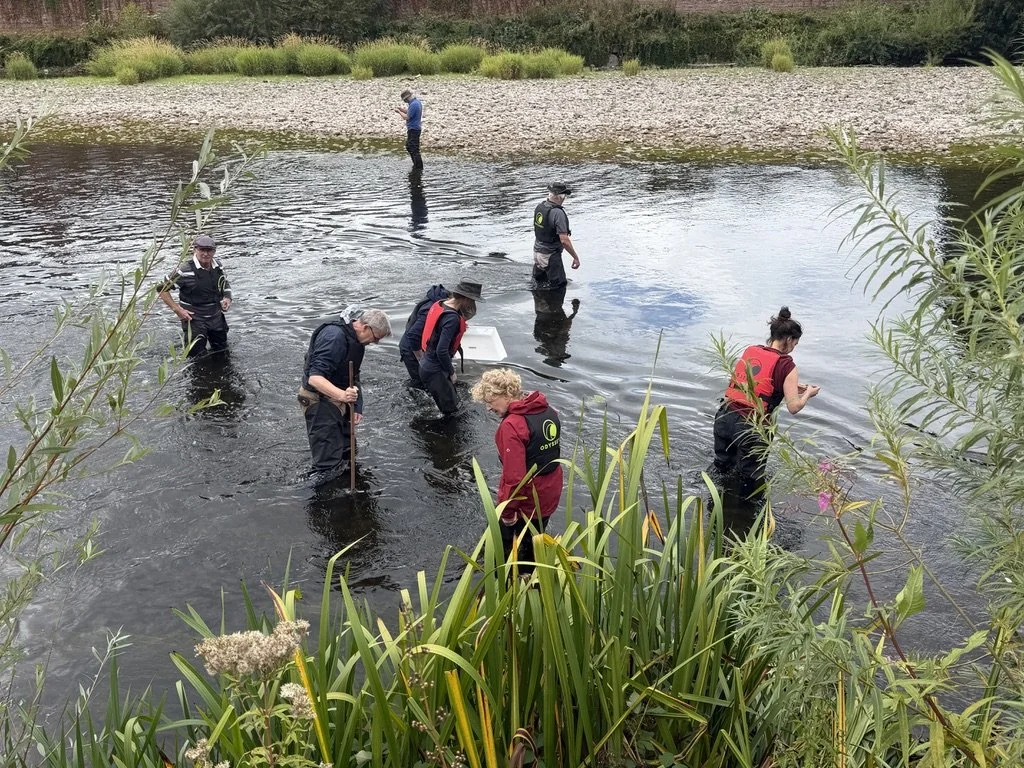
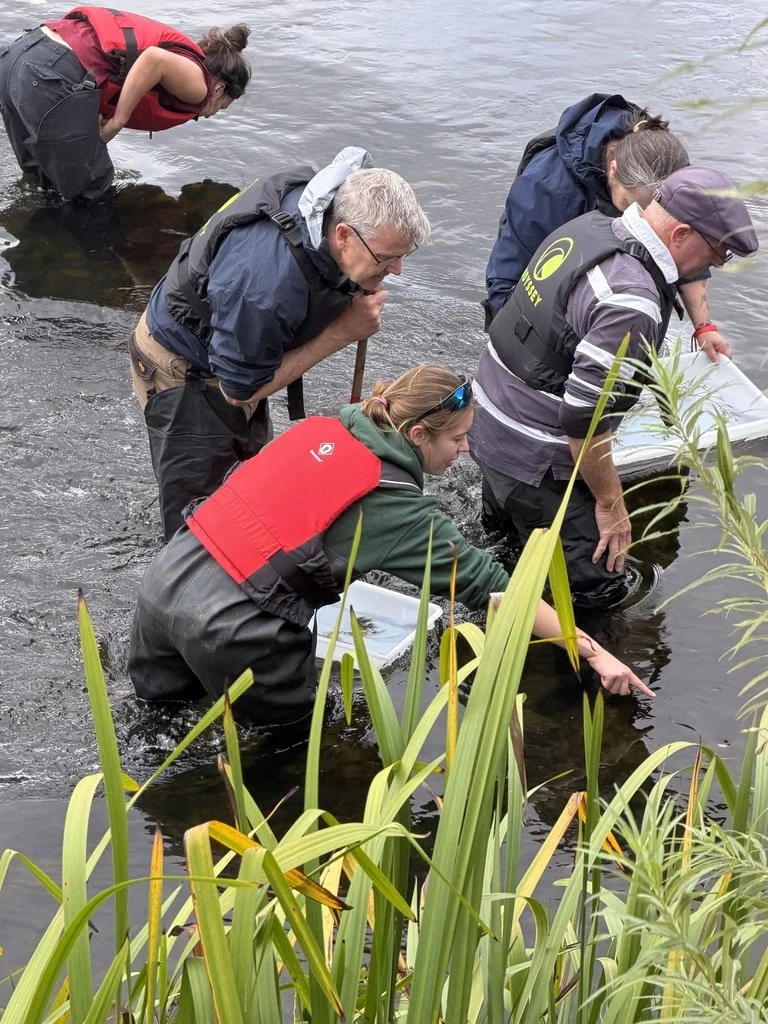
Volunteers acquainting themselves with macrophyte identification in the river Usk.
Our first macrophyte training session
We are delighted to report that a new cohort of citizen scientists are being trained as part of our Nature Networks Fund - Ranunculus Project. We gathered on the banks of the Usk in Usk town on Friday 28th August.
Andy Karran and Chloe Lewis from the Gwent Wildlife Trust with help from our FORW team led by Annys Webb ran the training session. Andy covered macrophyte identification and taught everyone to use a grapnel. Chloe took the volunteers out into the river in waders to see what could be seen and identified.
Volunteers from across the Wye and Usk catchments travelled to be part of the training.
This is a pilot phase of an ambitious project with the purpose of these initial sessions being to develop a new citizen science survey methodology.
We were hugely encouraged by the passion and energy of our volunteers. Thanks also to our trustees Christine Hugh-Jones and Richard Howell for the support and providing these excellent images.
***
This project is funded by the Nature Networks Fund. It is being delivered by the Heritage Fund, on behalf of the Welsh Government.
Ariennir y prosiect yma gan y Rhaglen Rhwydweithiau Natur. Mae'n cael ei ddarparu gan y Gronfa Treftadaeth, ar ran Llywodraeth Cymru.
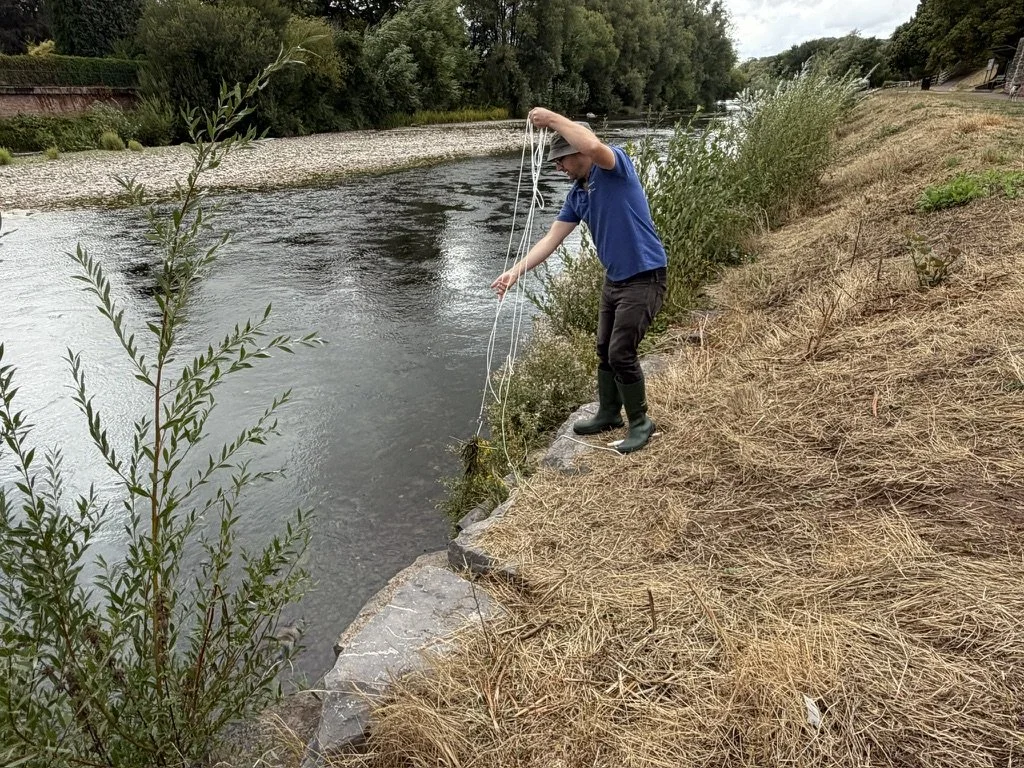
Getting to grips with a grapnel.
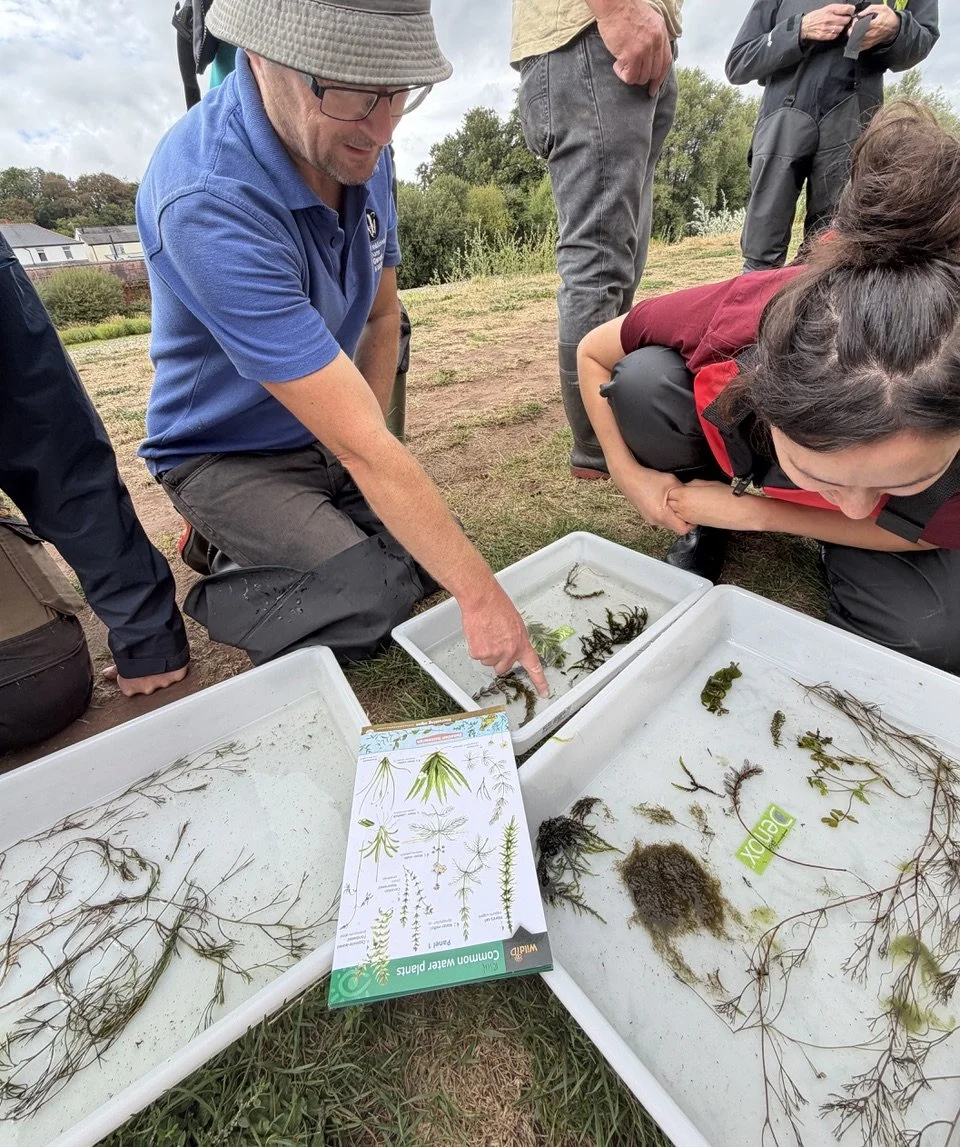
Identifying river plants.
The Ranunculus Project
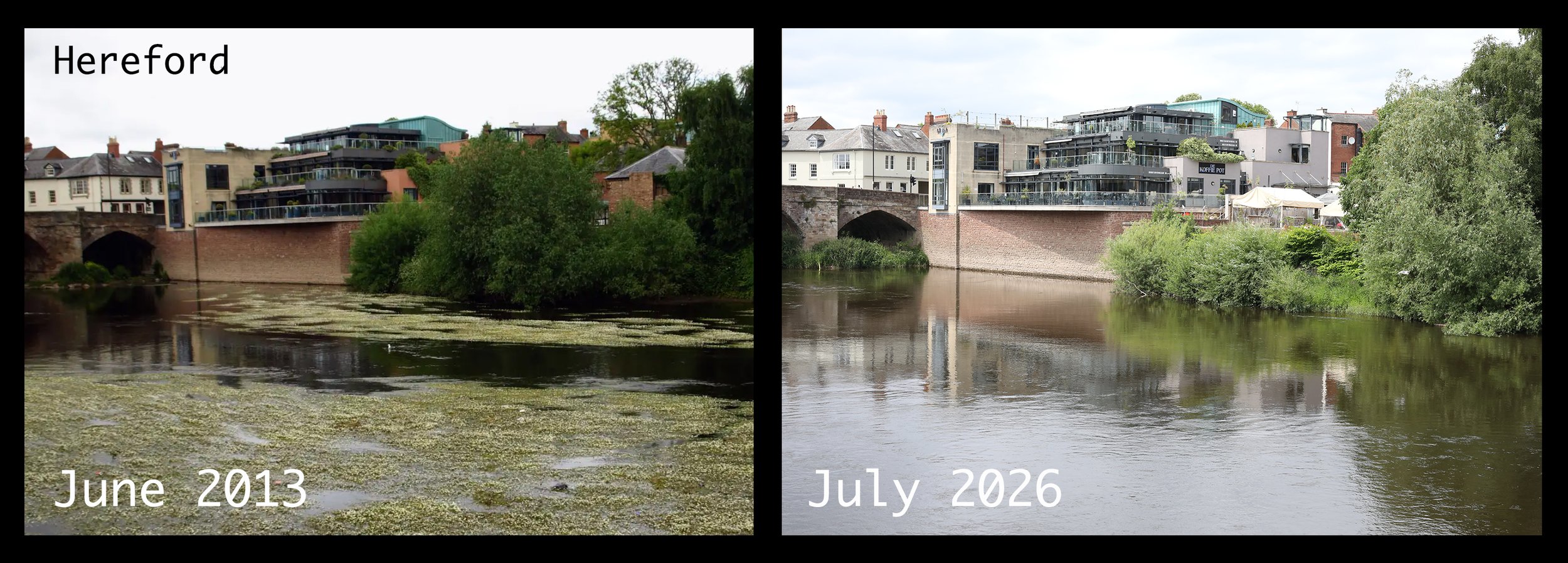
The Wye was once famous for its spectacular beds of water crowfoot (part of the Ranunculus family). In summer, you could stand on almost any bridge and see a sea of small white flowers floating atop the river. In fact the Wye has its SSSI status largely because of the complex habitats provided by this beautiful plant.
Sadly however experts and local river users estimate that more than 90% of the Wye's water crowfoot may have been lost over the last decade. Pollution and a changing climate, including severe floods are among the pressures thought to be involved, but we still don't fully understand what is driving the decline or exactly how much water crowfoot has disappeared.
That's where our Nature Networks Fund project comes in.
Friends of the River Wye (FORW) and Save the River Usk (STRU) have received a grant from the Nature Networks Fund to investigate the decline of water crowfoot across the Wye and Usk catchments.
And we’re thrilled to be getting started!
What is a macrophyte survey?
Macrophytes are aquatic plants that are large enough to see with the naked eye, including plants such as water crowfoot.
Once trained our citizen scientists will carry out pioneering macrophyte surveys, carefully recording where water crowfoot is present, how much is growing, and the condition of the river habitat. These surveys will be in addition to regular water quality monitoring and drone surveys. By using consistent survey methods at locations across the catchments, we can build a much clearer picture of where water crowfoot survives, where it has disappeared, and how its fortunes change over time.
These surveys will take place over the next three summers and will support the historical research already underway through the Big Ranunculus Watch.
By training local people to collect robust scientific data, we're taking an important step towards understanding what has happened to water crowfoot on the Wye and Usk and what it might take to bring it back.
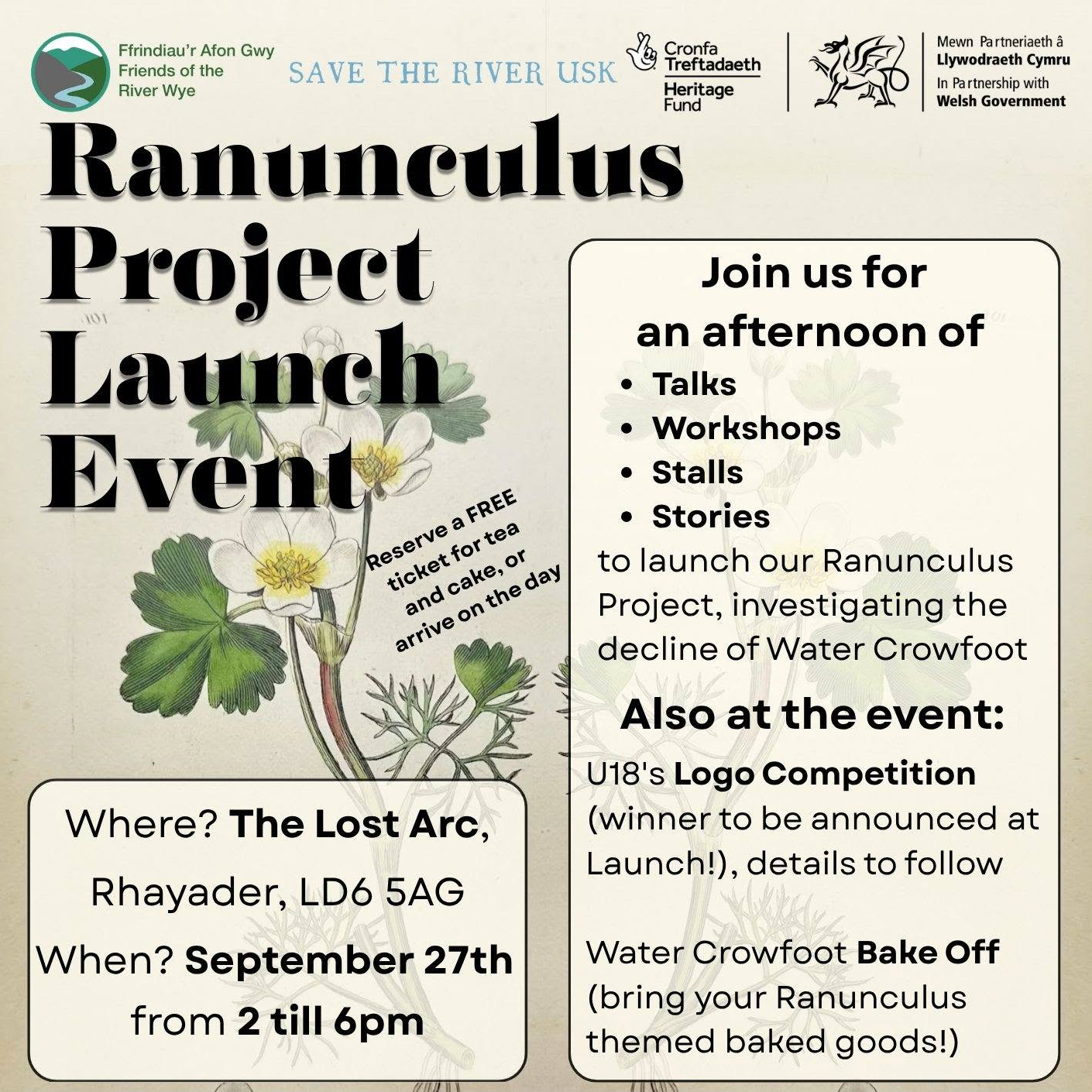
Come and celebrate our project beginning!
Sunday 27th September, Rhayader, 2pm
Click this link to reserve your place at our FREE event: https://tinyurl.com/3ej6sc5j