River Wye Charter signing and ceremony marks historic moment for Rights of Nature movement in the UK
On Sunday 24 May 2026 a procession made its way from the Hay Festival to The Warren in Hay-on-Wye. There on the shale beach; communities, campaigners, councillors, artists and river guardians gathered to witness a landmark moment in the campaign to Save the Wye — and in the growing Rights of Nature movement across the UK.
The launch of the River Wye Charter marks what is believed to be the UK’s first full catchment Rights of River Charter, and the first Rights of River framework for a Welsh river. Rooted in collaboration across borders, landscapes and communities, the Charter recognises the River Wye not merely as a resource to be managed, but as a living ecosystem with intrinsic rights: the right to flow, to regenerate, to sustain biodiversity, and to exist free from pollution.
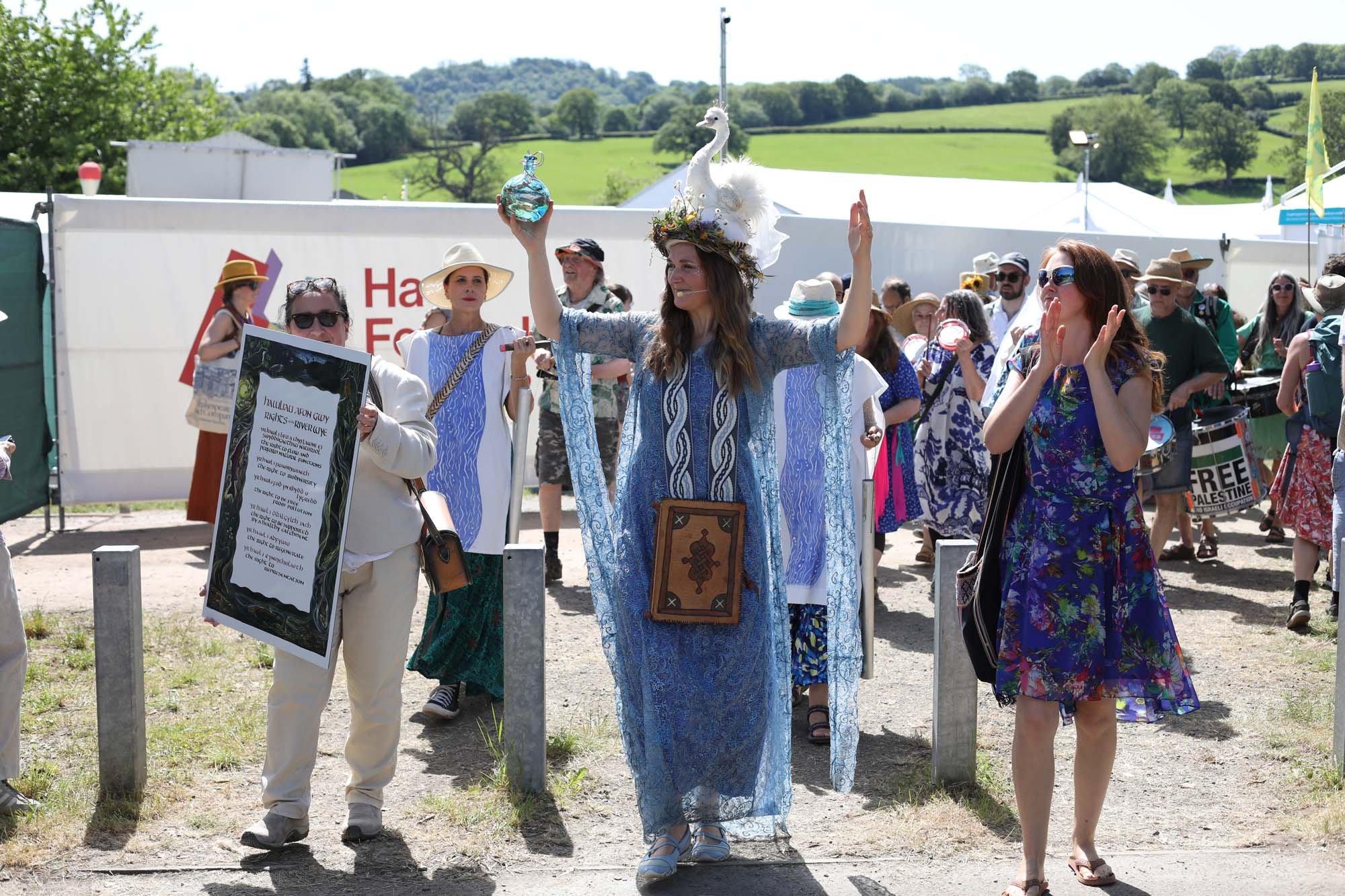
Vey Straker as Lady Wye led the procession, the charter carried aloft by Councillor Elissa Swinglehurst.
For many present at the ceremony, this was more than a policy milestone. It was a deeply emotional and hopeful moment for a river that has become both a national symbol of ecological decline and a rallying point for public determination to restore and protect nature.
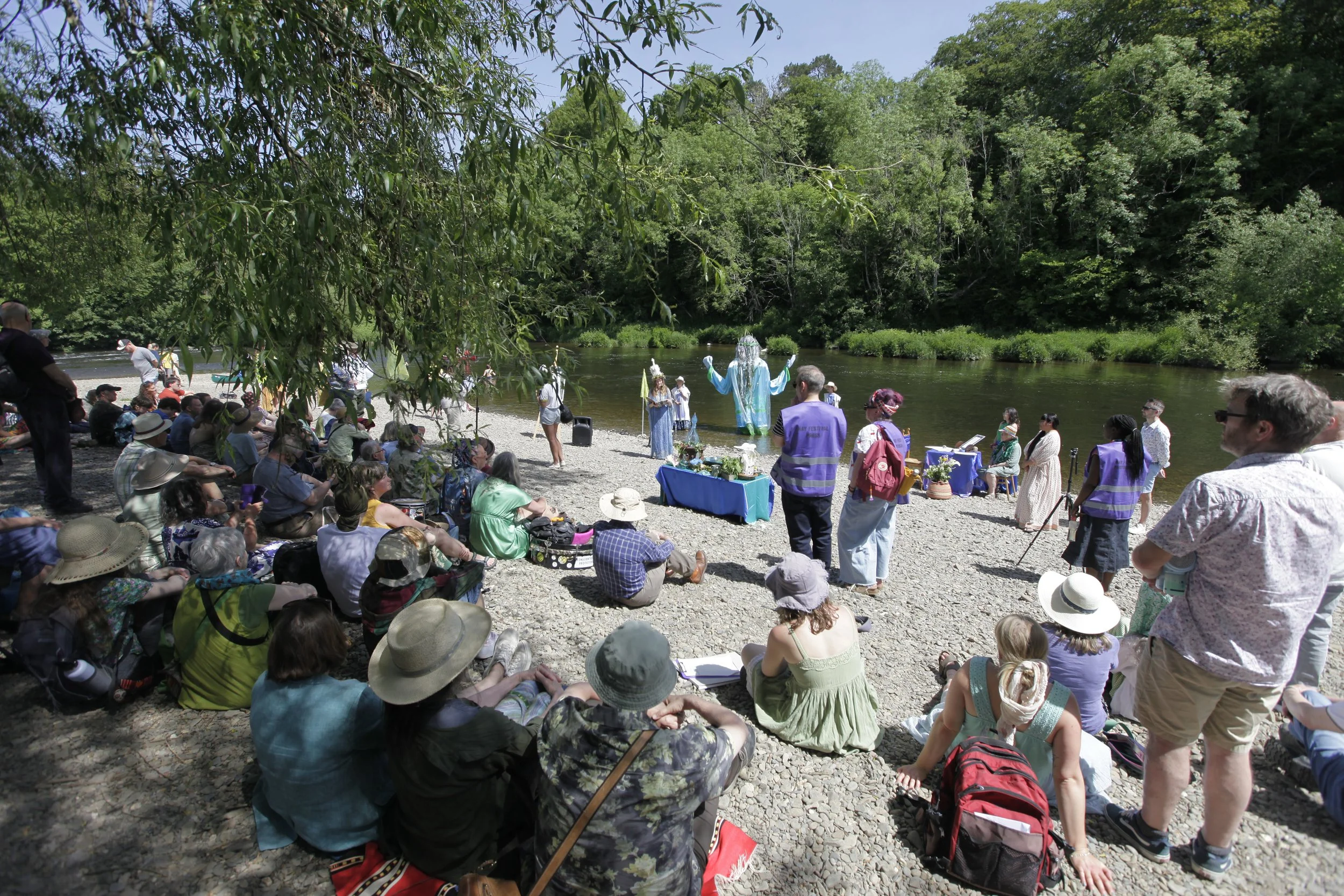
Crowds gathered in record breaking heat down at The Warren.
Developed collaboratively across the catchment, the Charter has already received endorsement from Herefordshire, Powys and the Forest of Dean councils, alongside Bannau Brycheiniog National Park and the Wye Valley National Landscape. Monmouthshire County Council is also expected to confirm its support in the coming weeks.
The significance of this alliance was reflected in the words of author Robert Macfarlane:
“Change is rising from the riverbank upwards, and change from below is almost always the most durable kind of change. What especially impresses me is the catchment-wide nature of this initiative. Having four councils and two landscape-scale organisations behind it is testimony to the alliance-building power of the river rights vision.”
The Charter emerges at a critical time for the River Wye. Once celebrated as one of Britain’s most ecologically important rivers, the Wye remains under severe pressure from nutrient pollution, biodiversity loss, climate impacts and emerging contaminants. Yet Sunday’s gathering carried a clear message: communities across the catchment are no longer willing to accept ecological decline as inevitable.
A particularly significant step in this evolving approach came in 2025, when ecologist Dr Louise Bodnar became the first appointed “Voice of the River Wye”, taking a formal voting seat on the Wye Catchment Nutrient Management Board to represent the river’s interests in official decision-making.
Speaking at the launch, Dr Bodnar reflected on the deeper cultural shift the Charter represents:
“Putting the River on the board begins to move us away from an anthropocentric view of the world, where nature is a resource for us to use, towards a view in which we understand ourselves to be interdependent parts of the natural world, reminding us that we belong to the earth, the earth does not belong to us.
“By recognising the River Wye as a stakeholder in planning, permitting and environmental governance, the Charter helps embed the river’s interests within decision-making processes. It strengthens accountability and encourages the long-term stewardship needed to support the Wye’s recovery and future resilience.”
The Charter also reflects the breadth of support for stronger river protection across political and civic life. The original proposal was tabled by Conservative councillor Elissa Swinglehurst, demonstrating the shared recognition that the future of the Wye transcends political boundaries.
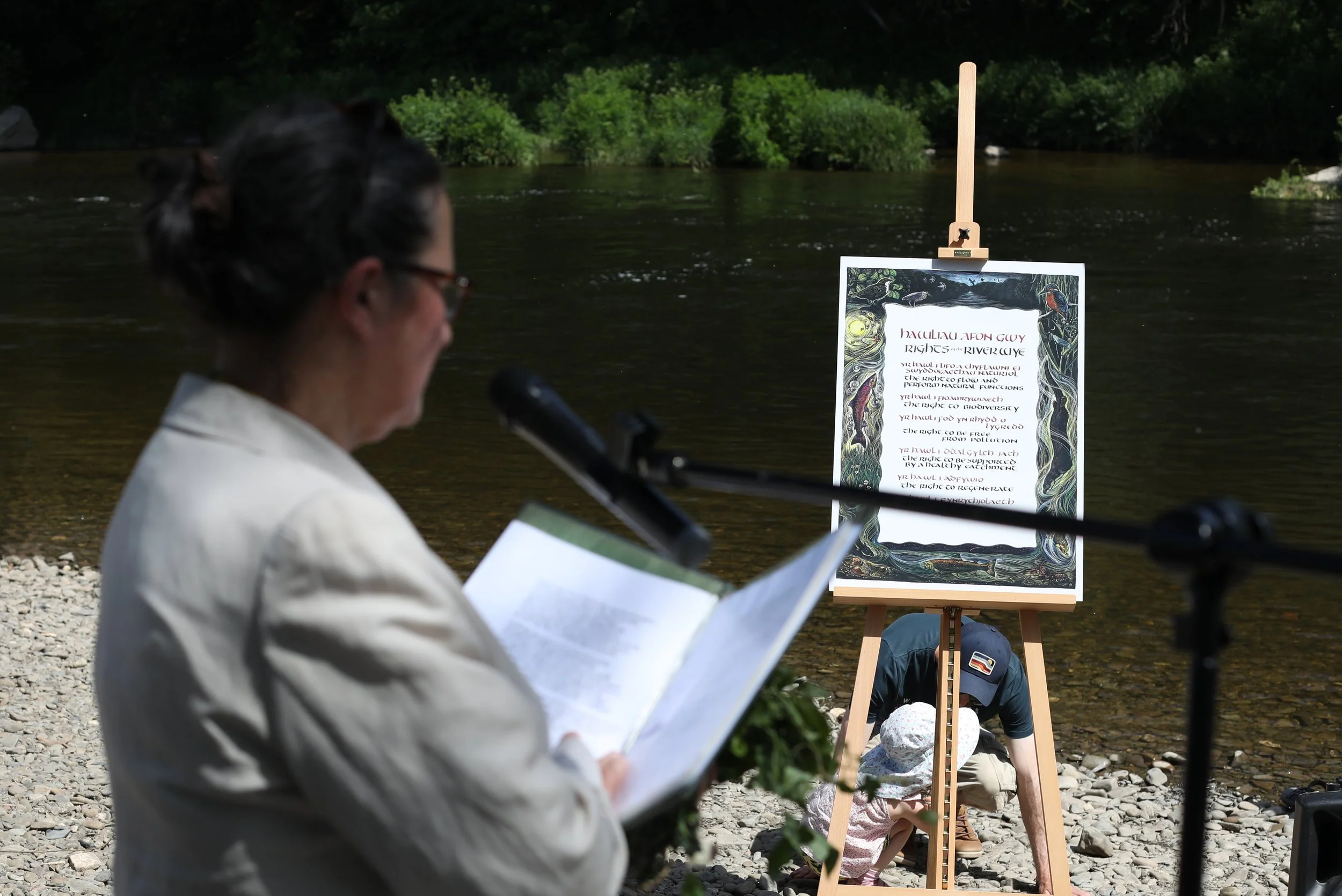
Councillor Elissa Swinglehurst read a poem to the Wye in front of the charter.
Amy Fairman, Head of Campaigns at River Action, described the Charter as a source of genuine hope:
“The River Wye has become a symbol of both ecological collapse and public determination to fight for our rivers. This Charter represents something genuinely hopeful: communities, councils, campaigners and institutions coming together to recognise that rivers are living systems deserving of protection, representation and recovery.”
The launch ceremony itself embodied the spirit of the movement — grounded equally in ecology, community and culture. Vey Straker, Lady Wye, and Kim Kaos, the Goddess of the Wye, led a moving riverside ceremony that honoured the river not only as a watercourse, but as a living presence woven through the landscapes, histories and identities of the communities along its banks.
As songs, speeches and conversations unfolded beside the river, there was a palpable sense that something important was shifting. The Charter may not solve the Wye’s ecological crisis overnight, but it establishes a new framework for thinking about rivers: not as passive assets, but as living beings whose health and flourishing are inseparable from our own.
For Friends of the River Wye and the many organisations, residents and river advocates who have worked tirelessly toward this moment, the Charter launch represents both a celebration and a beginning.
The work of restoring the Wye continues — but now, the river has a recognised voice at the table.
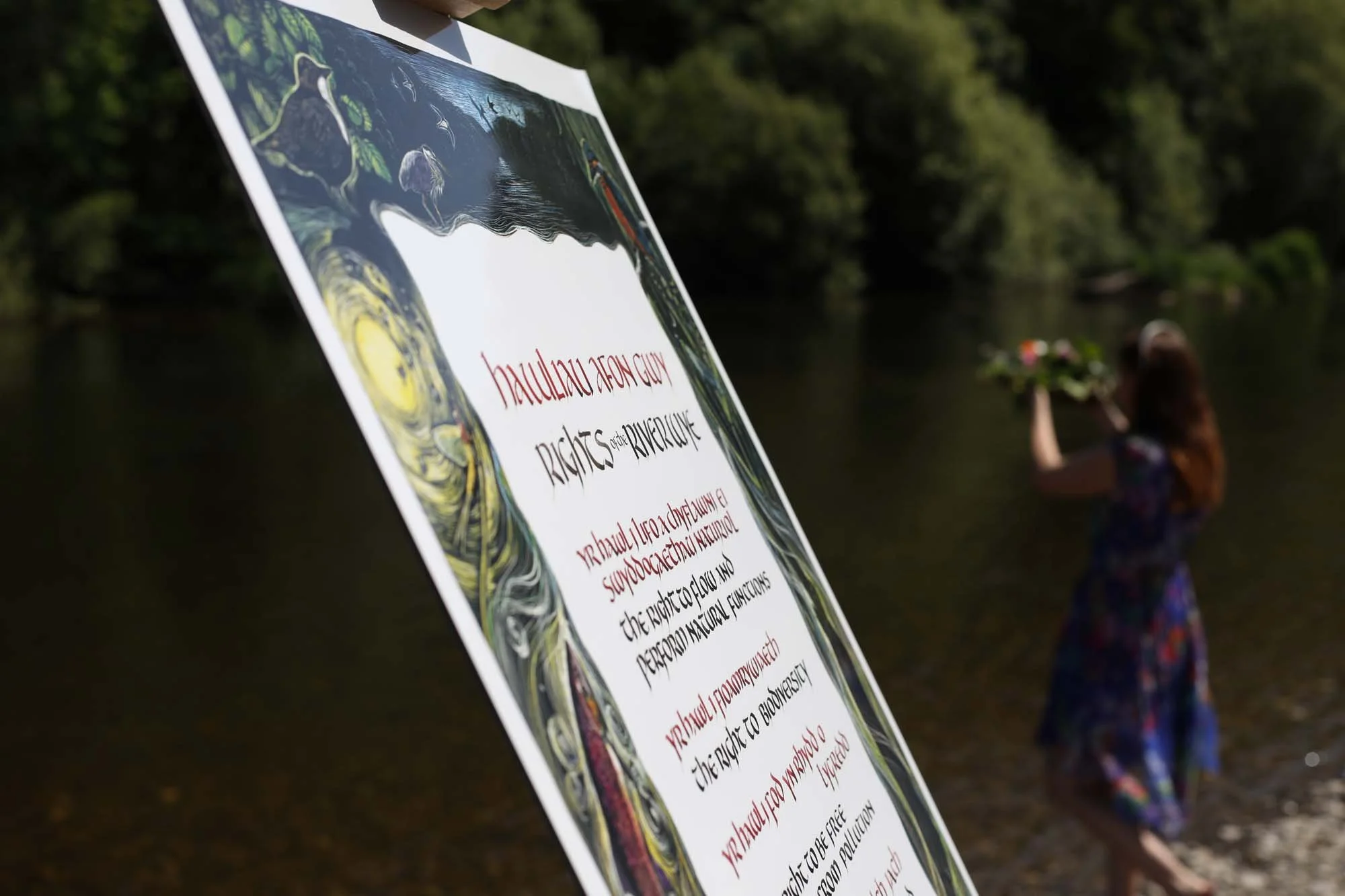
Dr Louise Bodnar ‘The Voice of the Wye’ making an offering to the river at the signing ceremony.
Film and images by Eamon Bourke, drone and camera assist by Antonia Salter.