Very high E.coli levels found at The Warren as we restart weekly water testing
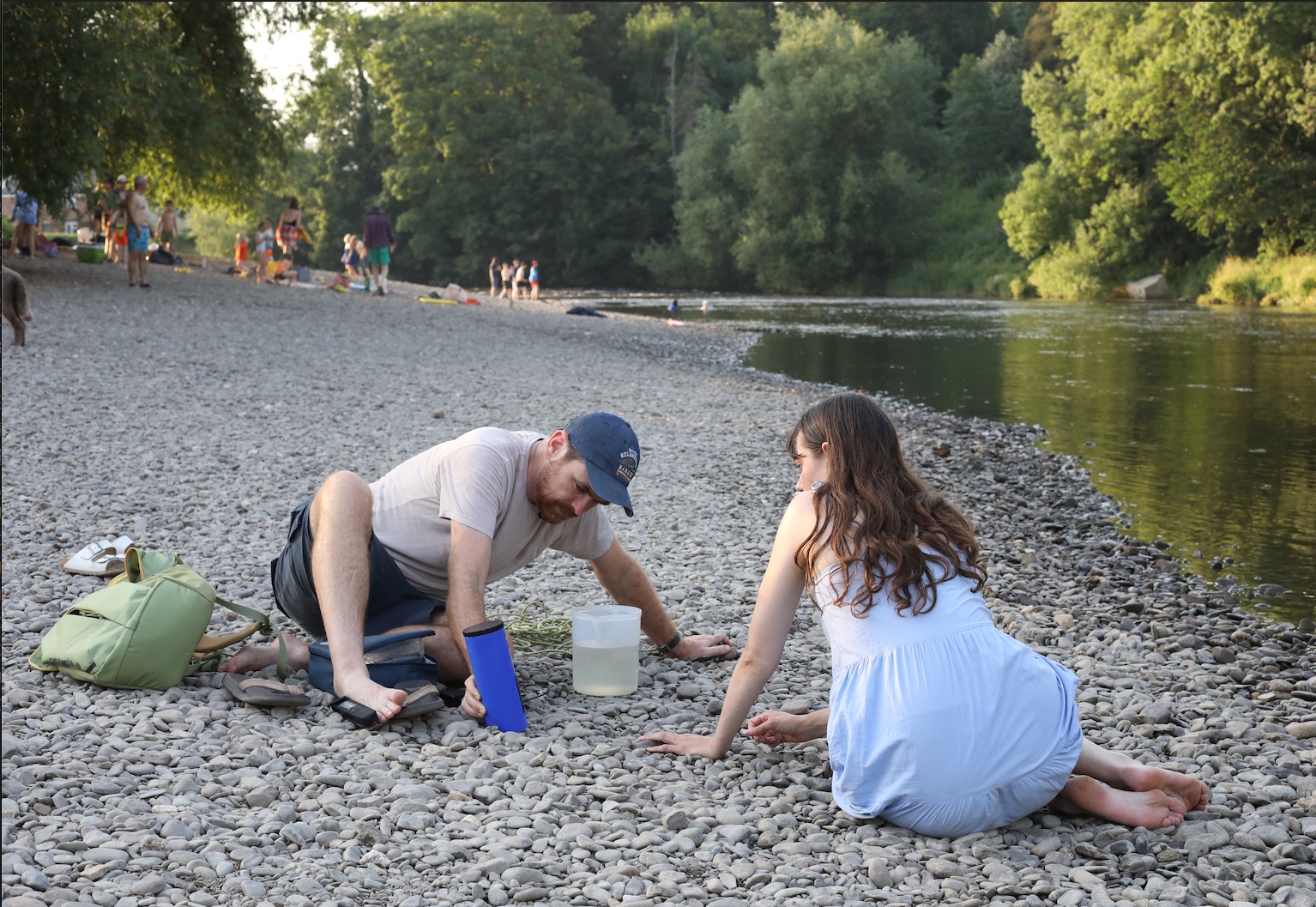
Pat and Anny conduct the first test of the bathing season for FORW.
We have restarted our independent bacterial testing programme at The Warren in Hay-on-Wye, and we are shocked to report that our first result of the 2026 bathing season has revealed the highest level of E.coli we have ever recorded at the site.
A sample taken at 8pm on Thursday 25 June at The Warren, Hay-on-Wye, recorded 3,088 colony-forming units (CFU) of E.coli per 100ml - more than three times over the threshold for safe bathing.
This result indicates very poor water quality and unsafe bathing conditions at the time of testing.
We were surprised and saddened by this result. Levels this high are typically only seen after heavy rainfall has washed pollutants into the river, making this an especially concerning start to the bathing season.
During the same test, we also recorded our highest ever water temperature at The Warren, measuring 28.3°C.
Our bacterial testing programme builds on the work we undertook to secure Wales' first designated river bathing site at The Warren. We campaigned for this status because we wanted regular water quality monitoring to become a reality, giving local people and visitors information and to impose a duty on the regulators to take action if the water quality is poor.
The official monitoring carried out since then has shown why this matters. During the 2024 bathing season, three of six Natural Resources Wales (NRW) samples failed to meet acceptable bathing water standards. NRW tests for Intestinal enterococci as well as E.Coli. When NRW's results were combined with data from Dŵr Cymru/Welsh Water and our collaborative monitoring with the University of York, eight of 29 samples exceeded safe limits for bacterial contamination.
In the 2025 bathing season, only two of our 13 samples found high levels of E.coli, with 11 samples meeting excellent condition. NRW’s testing last year found poor bacterial water quality twice out of 16 tests. A very dry summer may have reduced sources of contamination being washed into the river.
Nicola Cutcher, Co-Chair of Friends of the River Wye, said, “We’d like to see NRW proactively investigate the source of this contamination. Where is this E.Coli coming from? We need them to undertake further investigations to determine whether the source of this bacteria is from human sewage, or if it's coming from an agricultural source?”
“The most common question we get asked is, ‘is it safe for me and my family to swim in the river’? We think these tests are providing vital information that the public want, but it’s essential that we find the sources of pollution locally and act to clean them up, so we can all enjoy this precious river safely and work to bring it back to health”.
This year we will be carrying out bacterial testing at The Warren every Thursday throughout the bathing season and publishing the results the following day.
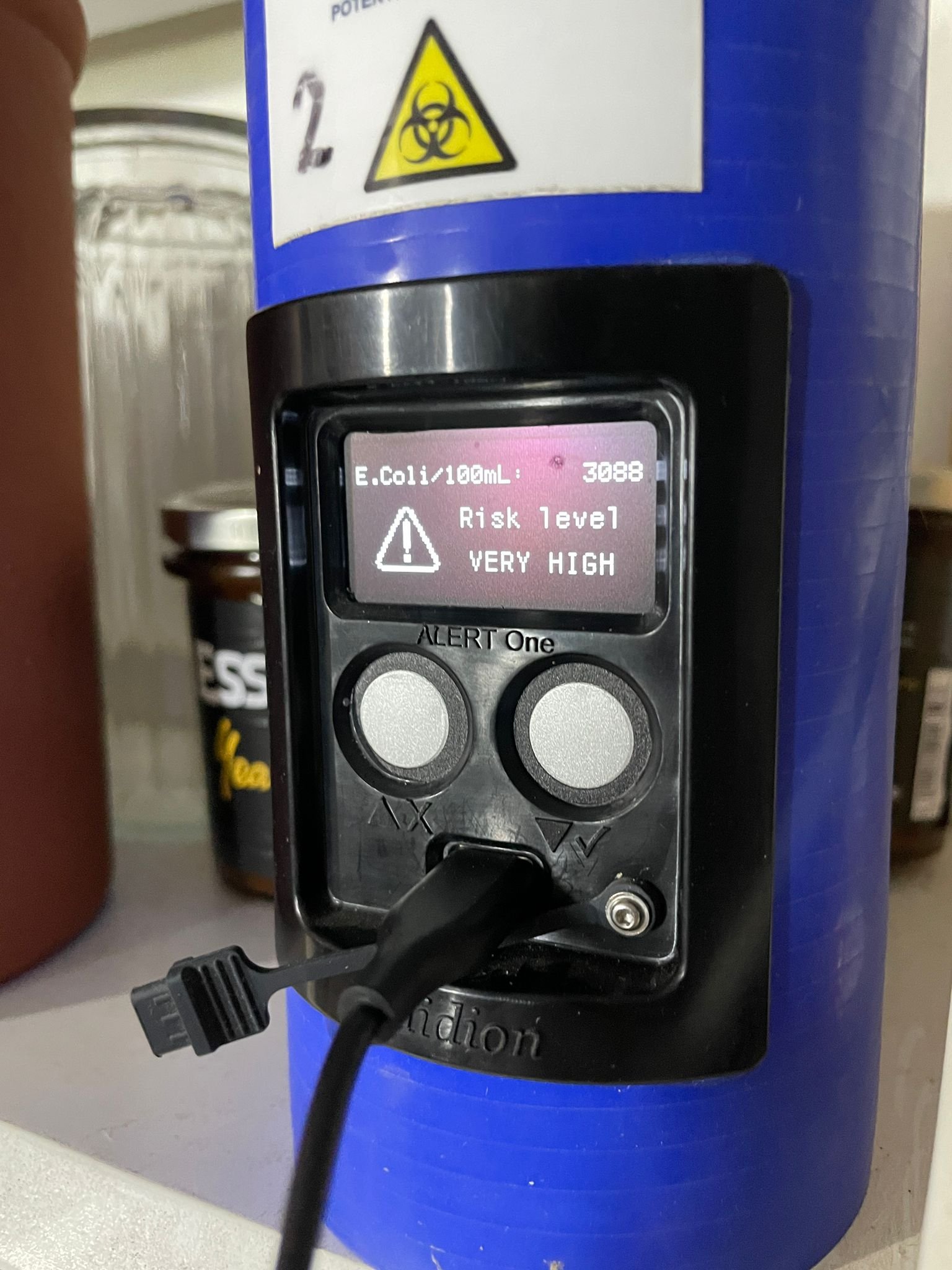
Unusually high reading, especially as there was no recent rainfall.
Our testing kits and reagents are provided by River Action, allowing us to publish E.coli results within 24 hours, compared with the official NRW bathing water results, which can take around 10 days to appear.
We do not issue bathing advice ourselves, but we believe people should have access to timely information to help them make informed decisions about entering the river. Last year's results from our independent testing closely mirrored the official NRW results, giving us confidence that they provide a reliable snapshot of water quality at the time of sampling.
It is important to remember that every test represents the conditions at that specific moment and does not predict future water quality. However, our testing continues to show that pollution remains a significant issue on the River Wye, with poor water quality often following rainfall.
We will publish our weekly results throughout the bathing season on our bathing waters page. We hope that by sharing this information as quickly as possible, we can help people make informed choices while continuing to shine a light on the urgent need to clean up the river and restore the health of the Wye.