
Too little too late. Environment Agency trial set to explore fines for agricultural regulation.
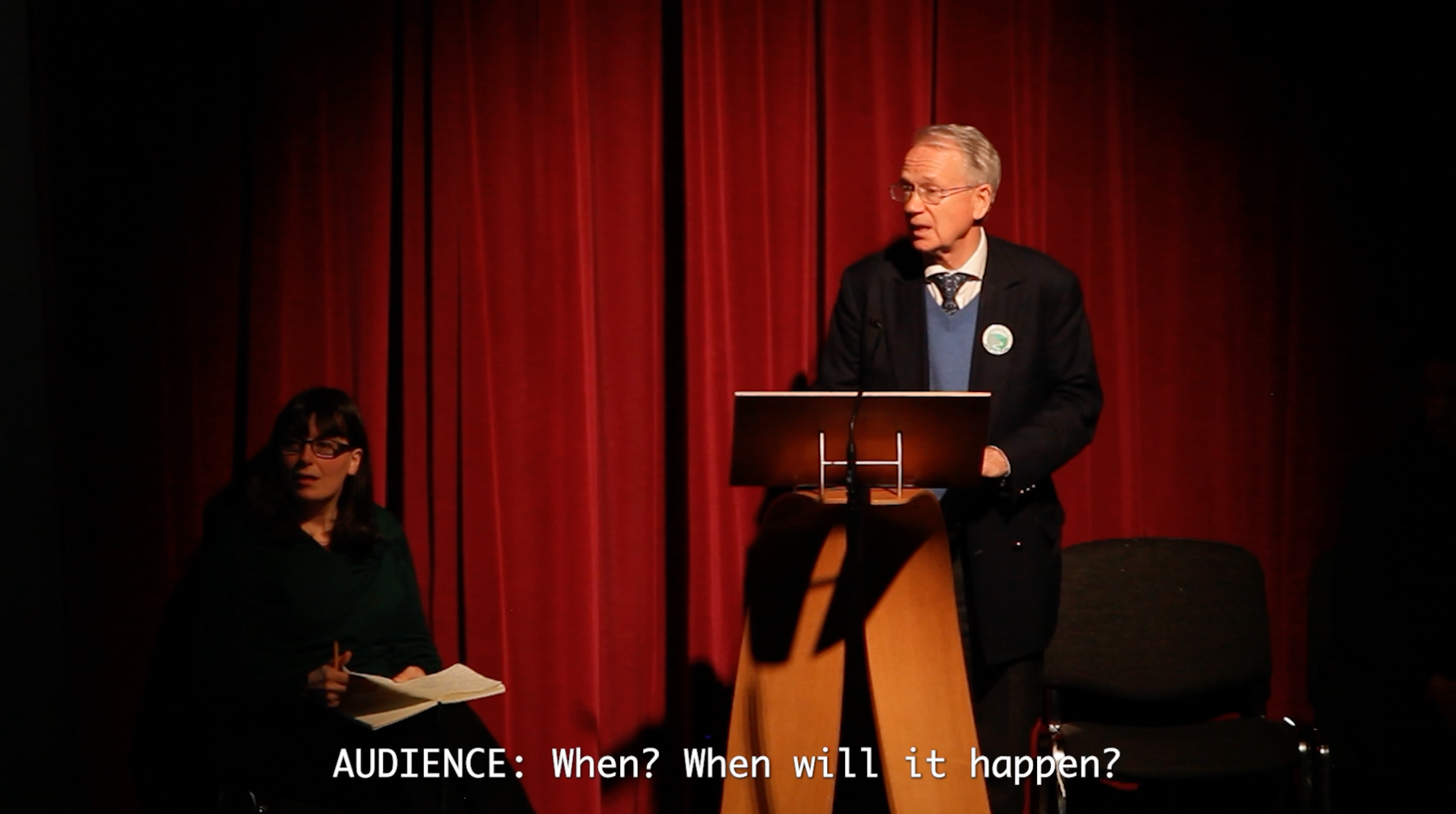
Alan Lovell, Chair of the EA at a Friends of the River Wye event in Monmouth, February 2024.
Environment Agency trial set to explore fines for agricultural regulation
The Environment Agency may be shifting its approach to regulating the agricultural sector in England, saying it is in the early stages of a national Fixed Monetary Penalties trial.
Environmental campaigners on the River Wye, a waterbody suffering from agricultural pollution, are calling on the EA for more details about the trial and an urgent commitment to enforcing the law.
The EA already has the power to issue fines to those who break environmental regulations, including the Farming Rules for Water and the Nitrate Pollution Prevention Regulations. They can issue fines of £100 to individuals, or £300 to companies, which are reduced for early payment and increased for late payment.
These fines are intended to address low-level agricultural offences where the offence is clear, the offender is known, and no serious pollution incident has occurred.
Between January and September 2025, the EA issued just two fixed monetary penalties in England. One was to a farm in Devon for not complying with rules around manure storage, and the other was to a farm in Derbyshire for not complying with rules governing the spreading of manure.
The regulator has focussed on providing advice and guidance and come under sustained criticism for its lack of enforcement action to uphold farming rules.
At a meeting of the Wye Catchment Nutrient Management Board at the end of April, a representative from the EA said, “We have got a bit of a development in terms of our agricultural regulation… We are piloting a trial on fixed penalty notices”.
Local environmental campaigners welcomed this news, as they have long called for enforcement action to tackle polluting practices and uphold the law. The Manifesto for the Wye, supported by a broad coalition of environmental groups, includes a demand for ‘on-the-spot fines’.
Friends of the River Wye recently published The Riverside Code, which includes a summary of some of the key farming rules.
Friends of the River Wye asked the EA for more information about the trial, including a timetable for when it would be rolled out across England and how it would be communicated to farmers.
The EA refused to offer any further comment because the trial is in its early stages, but said they are internally considering how they can use their powers for some agricultural offences.
Nicola Cutcher, Co-Chair of Friends of the River Wye, said, “We really hope this trial marks a serious shift in approach from the EA, away from simply giving advice and to actually enforcing the law. Given how much harm agricultural pollution is doing to our rivers, we’re incredulous that we’re still waiting for the most basic penalties to be applied for illegal activities. The EA already has the power to issue fines and it needs to get on with it."
“Farmers deserve a fair playing field. We want to see farmers better supported to do the right thing, but we can’t allow those who flout environmental rules to get away with it and undermine the efforts of everyone else. There must be consequences for breaking the law.”
David Gillam, Chair of the Save the Wye campaign group, commented, “Save The Wye are pleased to see the Environment Agency finally take the simplest ‘baby steps’ towards properly enforcing the law. Though I have to say it’s a bit like being told that the police are going to start fining people for speeding instead of sending them a letter. This is something we’ve been asking the EA to do for years and which they should have been doing all along. We’d like the EA to share more details about this trial. Can they tell us when we can expect to see these fines rolled out across the country?”
James Wallace, CEO of River Action, said, “Farmers need to be supported to feed the nation, but just like everybody else, if they break the law they need to be held to account. A maximum fine of £300 is hardly going to change the behaviour of a huge agricultural business. Penalties must be both rapid and fit for purpose.”
"Do we really need more trials? The Government has an opportunity with the Clean Water Bill to support farmers to transition to river-friendly agriculture, however, after nearly two years in power they seem to be very resistant to protecting our treasured rivers like the Wye”.