Connecting the River Wye to the Atlantic Forest of Brazil: A powerful exchange of stories and solidarity.
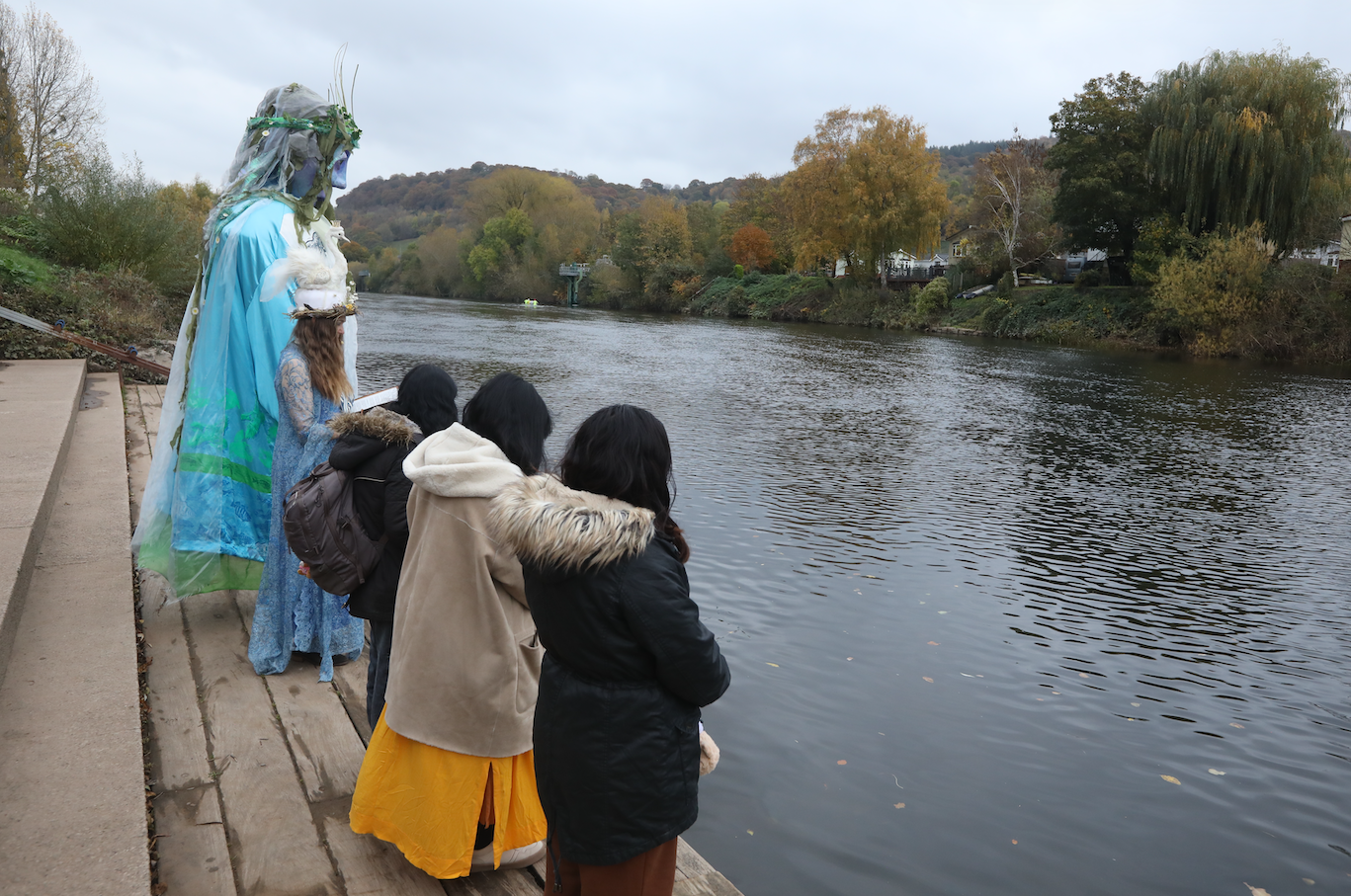
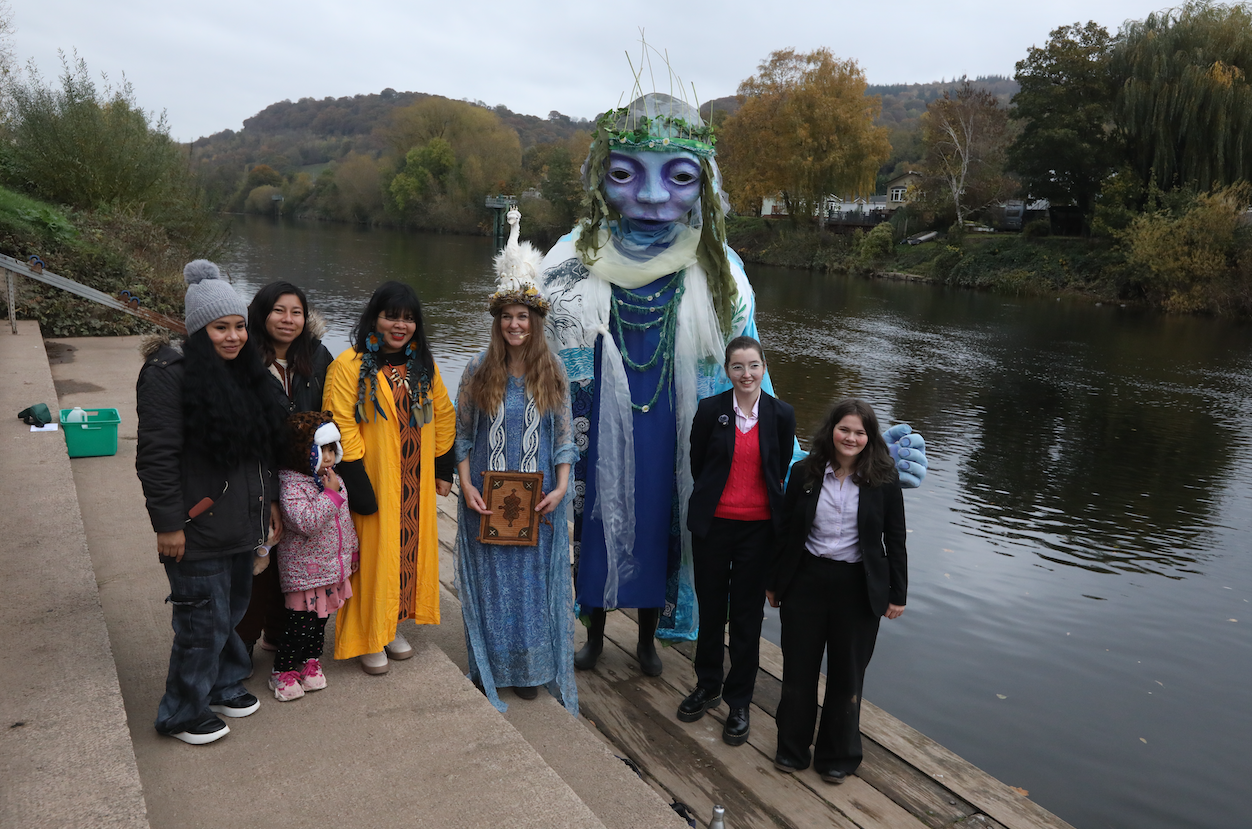
What happens in the forests of Brazil is connected to what happens to our rivers here in the Wye Valley. That connection was brought powerfully to life at a very special and moving event in Monmouth on the 5th November. Three leaders from the Guarani Indigenous People of Brazil met with Friends of the River Wye and other campaign groups to share their experiences of the impacts of industrial agriculture.
Organised by Size of Wales, the gathering brought together two communities living on opposite sides of a global food supply chain, united by their concern for the devastating environmental and social consequences of intensive livestock production.
The Guarani visitors shared first-hand accounts of how the expanding cultivation of soy in southern Brazil is threatening their ancestral territories, forests, livelihoods and culture. They spoke of the destruction of the Atlantic Forest, as well as the use of harmful pesticides on soy plantations. Size of Wales highlighted the use of these chemicals which shockingly are banned in the UK and EU yet still produced here and exported to South America.
FORW shared our experiences of the river's decline and spoke about the community-led campaign to save it. Nutrient pollution, largely associated with the huge concentration of intensive poultry farming in the catchment, is a major part of the problem. With more than 20 million chickens in the Wye catchment at any given time, the region produces more manure than the surrounding land can absorb.
A key part of the conversation was exploring the connection between these two seemingly distant places. Soy grown in Brazil is imported into the UK to feed intensively farmed chickens. The phosphorus contained in that feed ultimately passes into chicken manure, contributing to the nutrient pollution affecting the Wye. Studies show that the vast majority of phosphorus imported into the Wye catchment arrives in the form of animal feed.
It was a striking reminder that the environmental damage associated with our food system does not stop at national borders.
An opening ceremony led by the Goddess of the Wye and Lady Wye created a meaningful space for the exchange, while conversations throughout the day offered opportunities to listen, learn and reflect on the experiences shared.
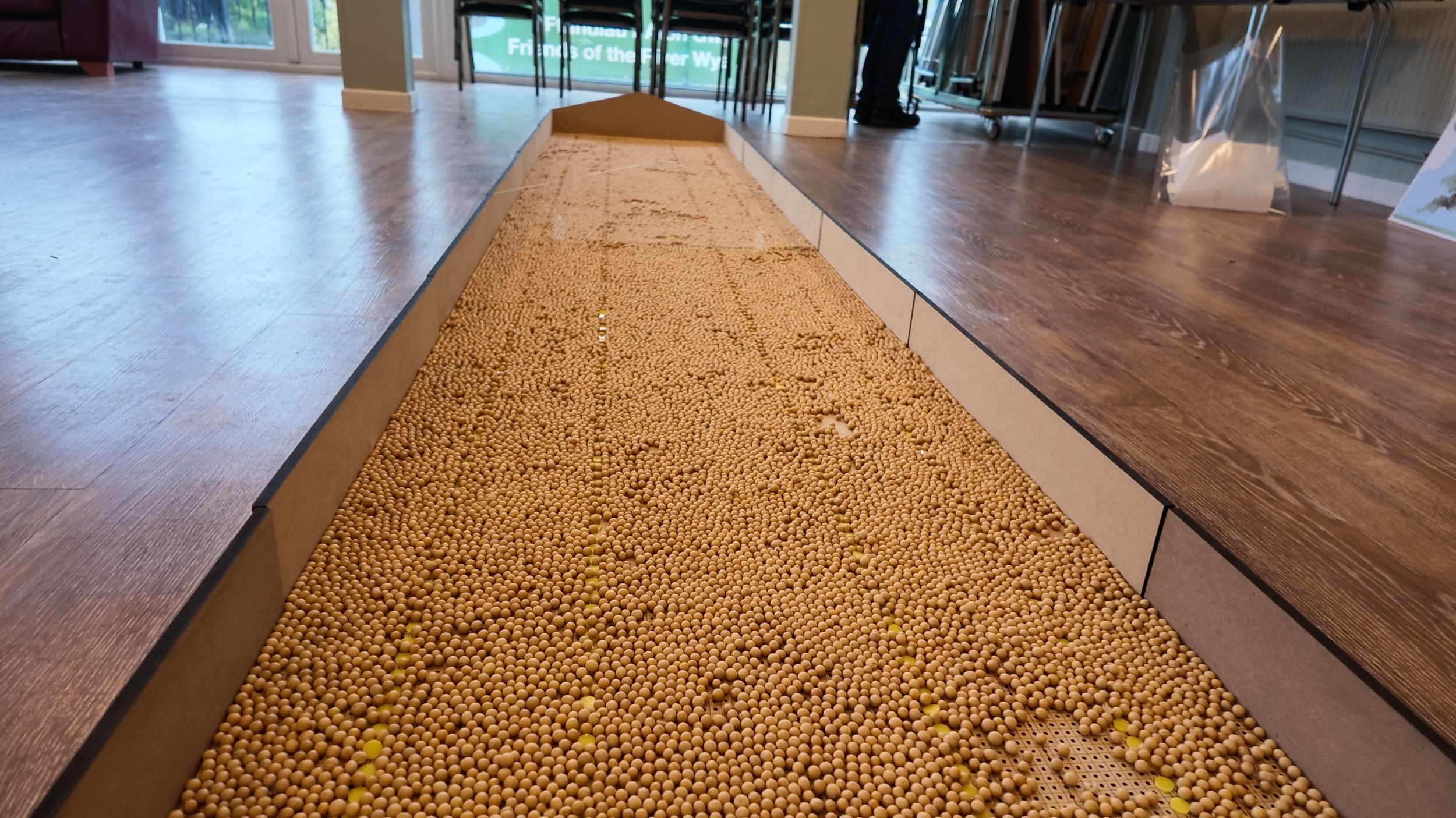
A striking visual centrepiece was a model created by Peter Brooks, depicting an intensive poultry unit housing 42,000 chickens. Using soybeans to represent the chickens, the installation made visible the often-hidden relationship between the birds (and eggs) we consume and the vast quantities of imported feed needed to produce them.
There was also an inspiring visit to Osbaston Church in Wales School, where pupils prepared and shared their chickpea khama! A deforestation-free alternative to the chicken korma on their school menu. Their work demonstrates how young people can question where their food comes from, audit supply chains and make positive changes that help reduce demand for intensively produced chicken and soy linked to deforestation.
The gathering coincided with the launch of a new report by WWF Cymru and Size of Wales, Wales and Global Responsibility II: Wales’s Hidden Deforestation Footprint: Actions for Change. Based on figures from 2011–2025, the report reveals that Wales imports an average of 186,000 tonnes of soy each year. Around 91% is used for livestock feed, rather than direct human consumption, and more than half is consumed by chickens. It highlights how the growth of intensive poultry farming is driving demand for imported soy, with serious consequences for forests, communities and ecosystems overseas.
Above all, the day was about connection, listening and solidarity. Hearing directly from the Guarani leaders brought a human dimension to the global supply chains that are so often hidden from view. It was both moving and illuminating to recognise the shared challenges facing communities in Brazil and Wales, and the importance of standing together to demand change. We also noted how dangerous any form of protest and environmentalism can be for the Guarani as they recounted the deaths of their community members who have stood up to the powerful agribusinesses in Brazil.
The event definitely showed that solutions are possible. From the Guarani's determination to protect their ancestral lands to the creativity and commitment of local schoolchildren, there are inspiring examples of people working to build a fairer and more sustainable food system.
We call on the UK and Welsh Governments to take urgent action to protect our rivers and tropical forests, reduce reliance on imported soy for intensive livestock production, and build greater food security. This means rejecting any poultry growth strategy devised by Big Chicken.
The health of the River Wye and the future of the Atlantic Forest and the Guarani are more closely connected than we might imagine. This gathering was a powerful reminder that, wherever we live, we all have a stake in protecting them.