Intelligent Intensive Farming
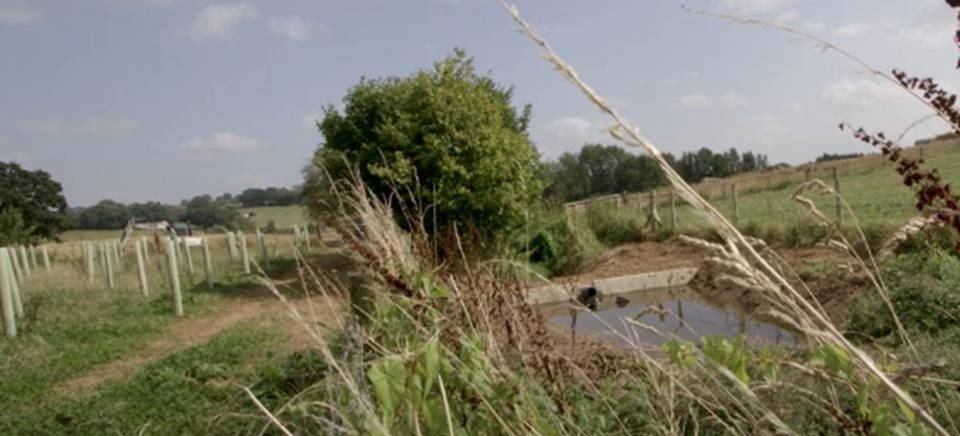
Wetland creation and riparian tree planting at Little Foome Farm
Poultry farmer David Watts runs Little Froome Farm, an intensive free range egg and poultry business, which proves that intensive farming doesn't have to be damaging to rivers or the rest of the natural world.
The river Froome flows through his farm, and David can prove that despite the high number of free range hens roaming his fields, the river is not polluted because of the actions he has taken and funded himself.
Mr Watts explains, the intensive poultry is the most profitable element of his farm and that he feels every profitable farm business has a duty to use part of their profits to ensure they don't cause harm. Mr Watts has proactively protected the river from harm by self funding the restoration of wetland habitats to his farm.
With advice from the Wye and Usk Foundation, David has restored wetland habitats along ditches and streams, planted trees, created ponds and fenced off areas to buffer watercourses and prevent manure or soil entering the river. The ponds and wetlands are planted with diverse native wetland plants which filter water coming off fields, and reduce suspended sediments and nutrients in the water, before it is returned to the stream, therefore preventing chicken waste washing off nearby fields from entering the water. These activities have ensured the Froome flows clean and clear through his farm, despite the 1000’s of chicken reared on the farm, and demonstrates how on farm actions can ensure rivers are protected from agricultural pollution, if you care enough to do more than wait for stewardship funding.
Naturally, Mr Watts is happy to utilize grants when they are available to protect the river, and he has also worked with the Wye and Usk Foundation to prevent downstream flooding by installing a series of wetland pools in an unproductive corner of an arable field, which divert excess flow out of the stream during heavy rainfall. The water is held back by the pools and then released slowly as river levels subside. This flood relief project was funded by LIDL through a partnership with the Rivers Trust.
Mr Watts presented his farm at Herefordshire Councils Annual River's Conference and urged other farmers to do as he has done, and fund river protection through the profits of their business, rather than do the bare minimum that stewardship options can fund.
This inspiring farmer is proving that profitable business and the protection of nature go hand in hand, and reminding everybody that we have a duty of care to the land that provides our living.
The River Frooms joins my sister, the Severn, but my river catchment one of Europe's largest producers of free-range eggs. Powys alone has over 150 intensive poultry units (IPUs). These units, hold as many as 64,000 hens on each farm, produce tens of millions of free-range eggs and thousands of tons of manure every year.
Manure and chemicals that wash off these farms and are spread over other farmland, are to blame for contaminating my waters with phosphates, fueling blooms of thick algae that can suffocate all who live within them. Simon Evans, chief executive of the Wye and Usk Foundation, said: “The Wye’s a beautiful river but its ecology is being destroyed. Planners are apparently unwilling to use the existing laws to protect the river from the nation’s desire to eat more eggs.”
Britons eat a staggering 13 billion eggs a year, thats 200 per person. Nearly 70% of eggs sold in shops are free-range, as supermarkets move away from selling eggs from caged hens. Yet photographs taken on farmers’ land by the Wye and Usk Foundation show manure effluent pouring into ditches, which flow into my streams.
Love and care are natural human responses, active forces not passive emotions. David Watts has chosen to act in this honourable and inspiring way, using the profit he makes from intensively producing eggs and chickens, to protect the river. Poultry is the UK’s most profitable form of farming, so this is a choice every farmer could make and supermarkets could insist on. Please use your Voice for the Wye and ask your supermarket to make River Friendly Farming a condition for its suppliers.
