Groundbreaking project will investigate the decline of Water Crowfoot in the River Wye and the River Usk
Friends of the River Wye (FORW) have received a £175,633 grant from the Nature Networks Fund, to work with Save the River Usk (STRU) on a project that will investigate the decline of Water Crowfoot.
The Nature Networks Fund is being delivered by the Heritage Fund, on behalf of the Welsh Government. It’s a programme that aims to strengthen the resilience of Wales' protected land and marine sites and accelerate nature’s recovery.
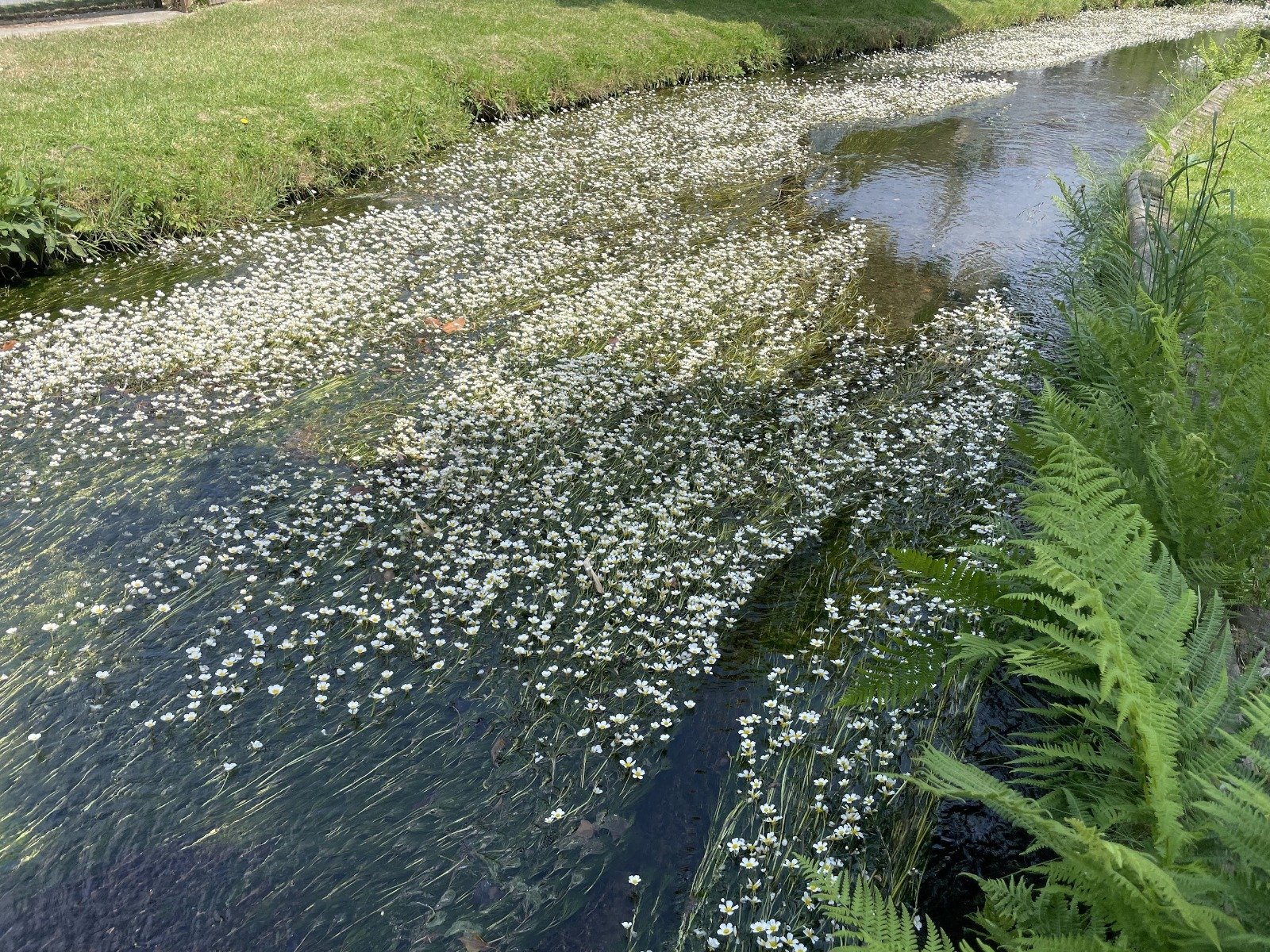
Large swathes of the River Wye and River Usk used to be covered in white flowers every summer, yet over the last decade, the water crowfoot which carpeted the rivers has largely disappeared.
The abundant presence of water crowfoot in the River Wye was akey reason that the river was designated as a Special Area of Conservation. Part of the Ranunculus family, this keystone species provides a precious habitat and food source for river insects, fish, and other wildlife, whilst serving to clean the water.
Locals would like to see a return to riverbeds with clean pebbles and green fronds, rather than the increasingly common sight of stones carpeted in algal slime.
The loss of this iconic plant has been a key symbol of the ecological decline of these mighty rivers, yet the causes of its decline remain uncertain. It’s also not known exactly how abundant the plant once was nor precisely how much has been lost.
Experts and locals, including wild swimmer Angela Jones from STRU, estimate we’ve lost over 90% of the water crowfoot in the River Wye over the last decade.
Last year FORW launched theBig Ranunculus Watch, appealing to the public to share their photos of water crowfoot in the river, past and present. This initiative is building a database of historical photos, enabling the group to map the plant’s presence through time, whilst monitoring how the plant is faring now.
Now FORW, working with STRU, will build on the information being submitted to the Big Ranunculus Watch and work to gather historical photos of water crowfoot in both rivers from as many sources as possible, including official datasets, satellite imagery and ecological records.
Citizen scientists from FORW and STRU will also be trained to survey the presence of water crowfoot in the rivers over the next three summers, starting this year.
The project will commission drone surveys as well as using ground observations, building on the pioneering work of Dr Fleur Visser of the University of Worcester and Wye Valley National Landscapes. Natural Resources Wales will also be advising and collaborating on the project. Information will be shared publicly through an open-access archive.
The project will research the conditions necessary for the plant to thrive and investigate what could be causing its catastrophic decline.
Tom Tibbits, Chair of Friends of the River Wye, said, “Water crowfoot used to blanket large swathes of the River Wye and it was so abundant that it seemed you could walk on water. Sadly, this precious plant has largely vanished in recent years. We want to find out what has been lost and why this has happened and explore what can be done to help this vital habitat return. We’ll bring together experts and local residents to investigate, thanks to this grant from the Nature Networks Fund. We hope this work will pave the way for restoring these plants to their former glory along these rivers”.
Angela Jones, Chair of Save the River Usk, said, “We are delighted to receive this support from the Welsh Government, the Heritage Fund and Natural Resources Wales. This funding means we can now develop our plans to analyse the data on water crowfoot on the River Usk, and better understand the reasons for its dramatic decline”