River Buffers & Arable Farming
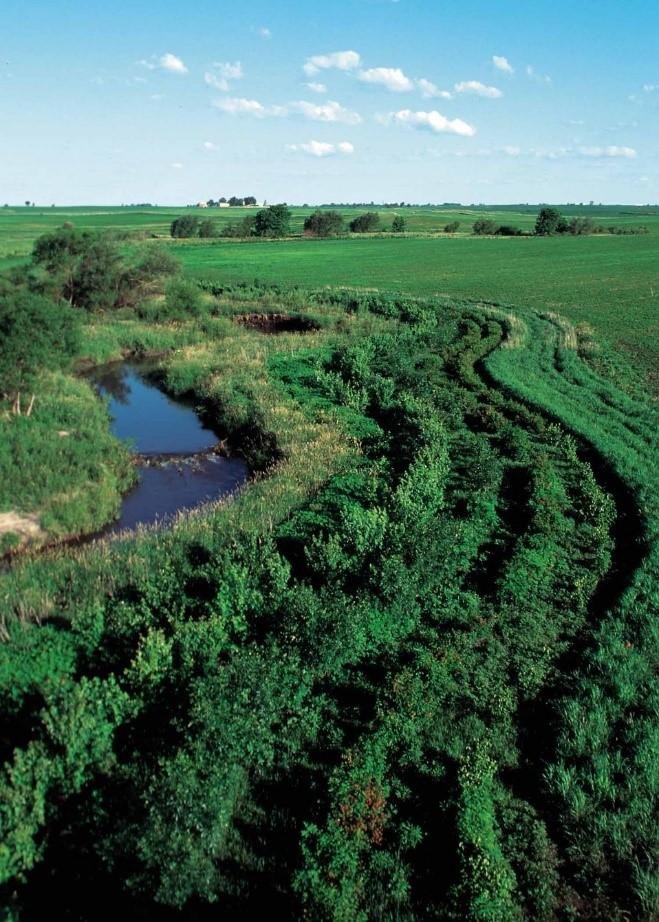
Newly planted buffer strip in Wales. CC businesswales.gov
“Buffer strips” as if the land adjacent to the river isn’t part of the river! You simply don’t remember. So many generations have grown up next to rivers which are just a shadow of their former selves, few people have seen what a river really looks like. Nobody living today remembers how I flowed and looked before I was dredged and deepened for navigation; before my marshes were drained; before my beavers were hunted to extinction; before farming pushed right up to the edge of my channel.
The floodplain isn’t land that is sometimes wet, its part of the river that is sometimes dry.
When you talk about “river buffers” you’re actually talking about parts of me, my natural floodplain and the edges of my river banks. Long ago people drained my floodplain so they could farm even more of the landscape. Now I can’t reach most of it, not since people deepened my channel and raised by banks so they could bring boats up my channel.
Beside my channel there used to be rich grasslands, which seasonally flooded. I brought fertile silt onto the grassland and it grew the richest hay. The riverside land was the most expensive land, prized for its hay meadows which fattened cattle and fed horses, in the days before oil and tractors, when the economy ran on hay and horses. In places there were marshes along my banks, rich marshes where the birds came every winter, filling the air with the sound of their calls and the beating of their wings. For you their arrival was a gift, the reeds thatched your roofs, the birds filled your bellies with meat and gave you warm feather beds. In other places there were wild wet woodlands of alder and willow, again they gifted you with flexible wood for building walls and fences, they sheltered otters and ensured my waters flowed clean.
Restoring these parts of me ~ and you must know that these ‘native habitats’ are as much a part of the river as the water is ~ even if you call them “buffers” between the farmland and my river channel, would help my waters to be clean again, allow fish to thrive again. Wetlands filter and clean waters, just as your kidneys filter and clean your blood. I am the blood of the land. I bring life to the land. I nourish and feed the land, that is my purpose, just as your blood nourishes and feeds your cells.
I created your rich soils, the wealth and fertility of the valleys you live in. I carved the old red sandstone, creating the fertile red and brown soils of the Herefordshire lowlands and with the rich river alluvium of the floodplain. But now you poison me with the soils I gifted to you because you farm too close to me.
There can be no safe arable farming within 50m of my river channel. Arable farming must move away from my river channel.
Decades of research evidence shows the same thing, arable fields must be buffered by 30-50m wide strips of native vegetation, grasses, shrubs and trees, to prevent soil, fertilizer and chemicals flowing off the field onto roads and into ditches, streams and rivers:
15m wide native vegetation buffers reduce nitrogen in surface runoff by 79%.
18m wide buffers prevented ecological damage from pesticides in 95% of streams studied.
50m wooded buffers are needed to restore populations of Salmon and Trout, who depend on leaf fall into the river, to feed the aquatic invertebrates they feed on, lower water temperatures created by riverine woodlands and banks stability created by deep rooted trees.
Such a wealth of knowledge on what to do and why it helps, yet so little action.
The restoration of woodlands and wetland habitats along my rivers and streams and buffers next to farm ditches would enable farming to thrive, by protecting precious farm soils from being washed away. Wetland creation on farms can protect crops from droughts, habitat restoration next to rivers and streams protects farmland from floods. Upland and lowland wetlands restore soil aquifers and enable soils to store water, slowly releasing it to streams and crops in dry months, protecting farming and food supplies from droughts and floods, which will become the new normal because of climate change. Let’s Make Space for Water to benefit every living thing.
